Skip to content







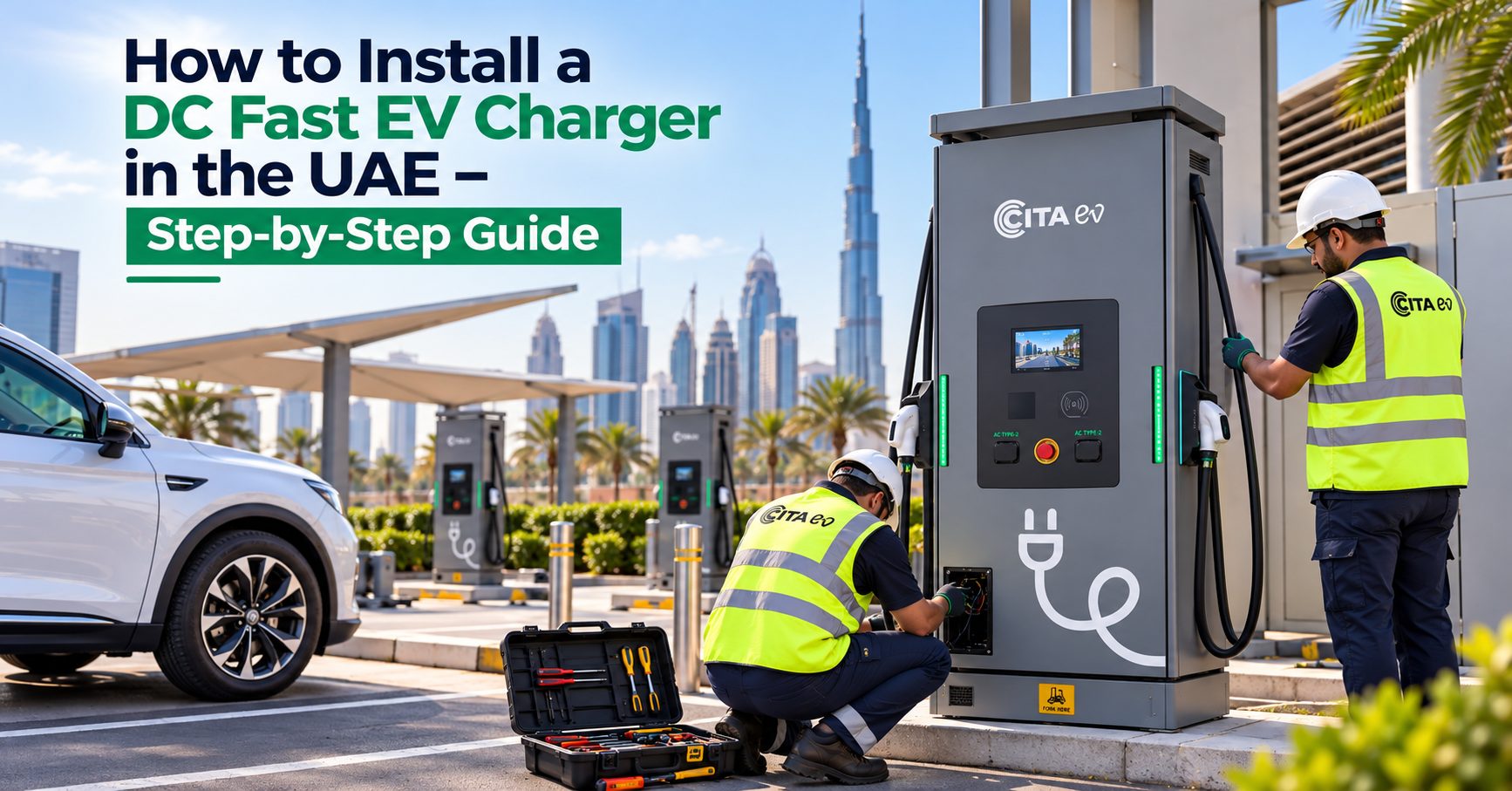
To Install a DC Fast EV Charger in the UAE, you need much more than choosing a charger and connecting it to an electrical supply. DC fast charging requires careful site planning, sufficient electrical capacity, regulatory approvals, civil and electrical work, network connectivity, safety systems and professional commissioning.
This becomes even more important as EV adoption expands across the UAE. Dubai alone had 47,944 EVs by the end of 2025, while its charging network had expanded to more than 1,860 charging points by early 2026.
Whether you are planning an EV charging station in the UAE for a commercial property, fleet depot, hotel, shopping centre, workplace or public charging hub, this step-by-step guide explains how the installation process works.
What Does It Take to Install a DC Fast Charger in the UAE?
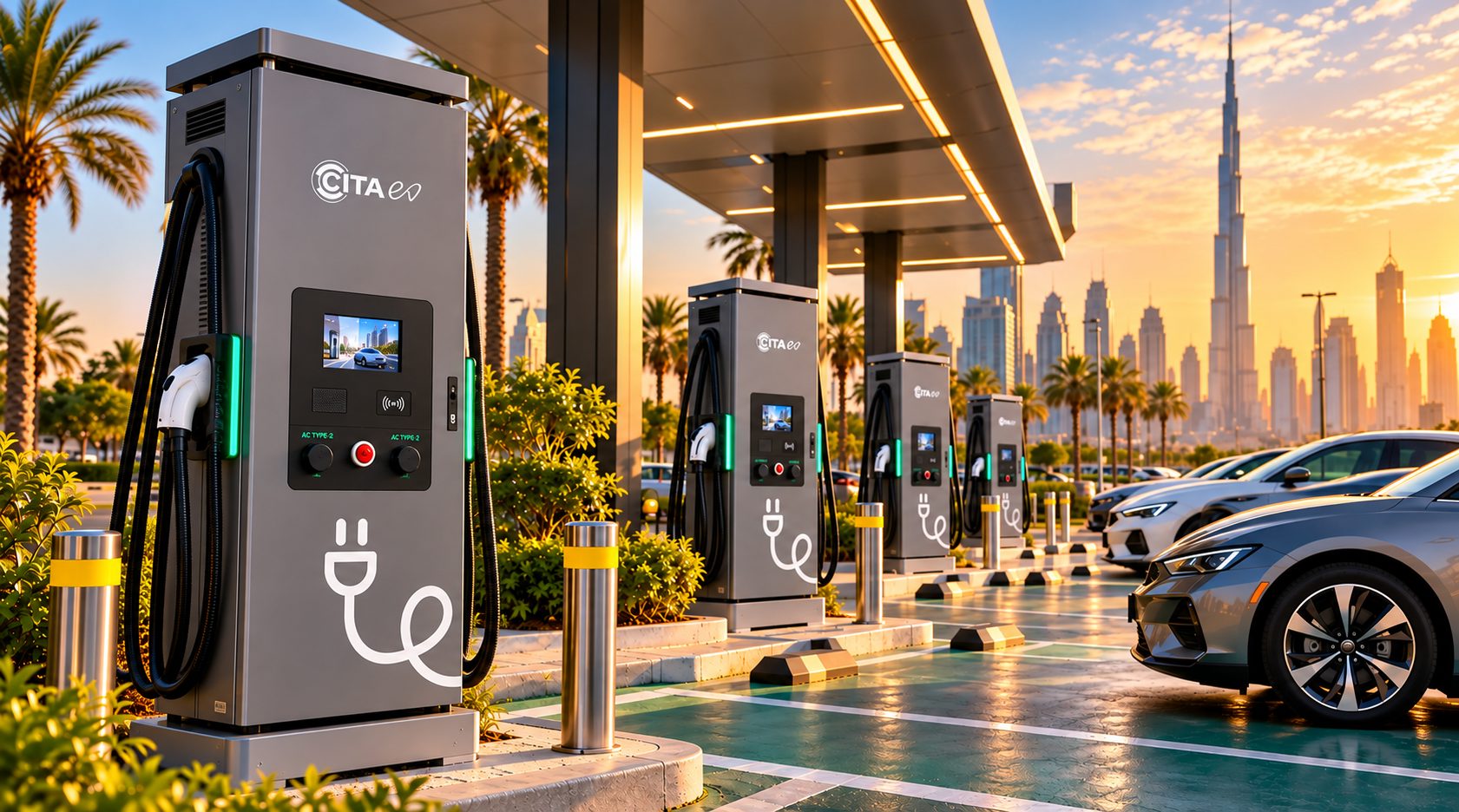
Installing a DC fast charger involves several connected stages, from assessing site power and selecting the right capacity to securing approvals, completing electrical work and commissioning.
Understanding each stage beforehand can help businesses plan the installation more efficiently and avoid costly delays.
Step 1: Understand Your Charging Requirements
Before you Install a DC Fast EV Charger in the UAE, start by defining exactly what the charging site needs to achieve.
Consider the number of EVs expected each day, average parking duration, required charging speed and whether the station will serve employees, fleet vehicles, customers or the general public.
A hotel may have very different requirements from a highway charging hub. Similarly, a fleet depot charging vehicles for several hours may not require the same power level as a busy public location where fast vehicle turnaround is essential.
These factors help determine the appropriate DC fast charger capacity and number of charging points.
Step 2: Select the Right DC Charger Capacity
DC chargers are available at significantly different power levels, so bigger is not automatically better.
Higher-powered chargers can reduce charging time for compatible EVs, but they also require greater electrical capacity and potentially more substantial infrastructure.
CITA EV Charger provides DC fast charging solutions starting from 40kW and extending up to 480kW, allowing businesses to select charging capacity according to expected demand.
When planning to Install a DC Fast EV Charger in the UAE, consider:
- EV models likely to use the station
- Maximum charging capability of those vehicles
- Average vehicle dwell time
- Daily charging volume
- Existing electrical capacity
- Potential future demand
Choosing the right capacity can prevent both underpowered infrastructure and unnecessary overspending.
Step 3: Conduct a Detailed Site Assessment
The next stage is an EV charger site assessment.
A qualified electrical professional should inspect the property and determine whether the existing electrical infrastructure can support the proposed DC charger.
The assessment should examine the incoming electrical supply, transformer capacity, distribution boards, cable routes, earthing arrangements and distance between the power source and charger.
Physical considerations matter too. The charger needs sufficient space, safe vehicle access, suitable parking bays, cable reach and protection from accidental vehicle impact.
For outdoor installations, equipment must also be suitable for the UAE’s demanding heat and environmental conditions. In Dubai, DEWA’s technical regulations require EV charging equipment to operate under specified conditions, including ambient temperatures reaching 55°C.
Step 4: Check Utility Capacity and Power Requirements
This is one of the most important steps when you Install a DC Fast EV Charger in the UAE.
A 40kW charger and a 480kW charging system place very different demands on a property’s electrical infrastructure.
If the existing supply cannot support the required load, the project may require an electrical upgrade, new distribution equipment or additional transformer capacity.
For sites installing multiple chargers, EV charger load management can help control how available electrical power is distributed across charging points.
Planning this correctly at the beginning can help avoid expensive infrastructure changes later.
Step 5: Obtain the Required Approvals
Do not begin physical installation before understanding the approvals applicable to your emirate and project type.
Requirements can vary depending on whether the charger is private, restricted-access or publicly accessible.
In Dubai, organisations and developers must obtain the appropriate DEWA approval before establishing and installing EV charging infrastructure. Public charging operations are also governed by DEWA’s Charge Point Operator licensing framework.
For DC charging specifically, DEWA currently provides a streamlined licensing route for chargers up to 50kW at restricted-access locations, such as hotels, gated communities and employee parking. Other DC charger installations are subject to specific DEWA approval.
Depending on the project, additional requirements from the relevant municipality, property authority or other government entity may also apply.
Working with an experienced EV charger installation company UAE can make this stage significantly easier.
Step 6: Prepare the Site and Complete Civil Works
Once approvals and designs are ready, physical preparation can begin.
To Install a DC Fast EV Charger in the UAE, contractors may need to construct a concrete foundation, prepare cable trenches or ducts, install protective bollards and create clearly marked EV parking bays.
The exact civil work depends on whether the charger is wall-mounted, pedestal-mounted, integrated into an existing car park or part of a larger charging hub.
Cable routes should be planned carefully to minimise unnecessary distance while protecting electrical infrastructure from vehicles, weather and physical damage.
Accessibility should also be considered so drivers can comfortably park, connect the charging cable and operate the charger.
Step 7: Complete the Electrical Installation
This is where the DC charger is physically connected to the site’s electrical infrastructure.
A qualified contractor will install the required cables, distribution equipment, protection devices, isolation equipment, earthing and other electrical components according to the approved design and applicable regulations.
Correct electrical protection is essential because commercial EV charging infrastructure operates at substantial power levels.
In Dubai, DEWA requires charging equipment to comply with applicable IEC standards. Public charging equipment is currently limited to Type 2 connectors for AC and CCS2 connectors for DC charging.
Electrical installation should never be treated as a DIY project. High-power DC systems require qualified professionals and regulatory compliance.
Step 8: Position and Install the DC Fast Charger
After the supporting infrastructure is prepared, the charging unit can be positioned and secured.
When you Install a DC Fast EV Charger in the UAE, technicians should ensure the unit has appropriate clearance, ventilation and service access.
The charging cable must comfortably reach the EV charging port without excessive tension. Protective barriers may also be installed where vehicles could accidentally strike the charger.
Outdoor equipment should have suitable environmental protection for dust, heat and other operating conditions.
CITA EV Charger’s DC range is designed for commercial and public charging applications, with solutions available for different site capacities and operational requirements.
Step 9: Configure Connectivity and Charging Software
Modern DC charging infrastructure does not end with hardware.
After installation, the charger needs to be connected to the appropriate communication network and management platform.
CITA EV charging systems can integrate with the CITA EV App and Charge Point Management System (CPMS), enabling operators to monitor and manage connected charging infrastructure.
Depending on the project configuration, smart charging software can help operators monitor charger status, review charging activity, manage users and oversee multiple chargers from a central platform.
For larger public EV charging infrastructure, this digital layer becomes particularly important because operators may be managing multiple charging points across different locations.
Step 10: Test and Commission the Charger
Before opening the charger to drivers, the complete installation must be tested.
Commissioning typically checks electrical connections, earthing, safety protection, charger communication, emergency-stop functions, connector operation and successful communication between the vehicle and charging equipment.
Technicians should also perform an actual charging test using a compatible EV or approved testing equipment.
If the charger is connected to a CPMS, its network communication and remote monitoring functions should also be verified.
Only after these checks are successfully completed should you consider the process to Install a DC Fast EV Charger in the UAE complete.
Step 11: Set Up the Driver Experience
For public or commercial chargers, think beyond the equipment itself.
Drivers should be able to identify the charging bays easily, understand how to start a session and safely connect their vehicle.
Clear signage, parking markings, charging instructions and customer-support information can significantly improve the experience.
If payment is offered, the selected payment and authentication system must also be properly configured and comply with applicable local requirements.
A technically powerful charger delivers limited value if drivers find it difficult to access or operate.
Step 12: Plan Maintenance and Future Expansion
The final step is preparing for long-term operation.
After you Install a DC Fast EV Charger in the UAE, create a preventive maintenance schedule covering charging cables, connectors, cooling systems, filters, electrical components, communication systems and physical condition.
Remote monitoring can help identify faults before they lead to extended downtime.
Businesses should also consider future expansion from the beginning. Installing spare electrical capacity, conduits or appropriately sized distribution infrastructure during the first project can make it easier to add additional DC fast charging stations as EV demand grows.
How Long Does It Take to Install a DC Fast Charger?
There is no universal installation timeline.
A relatively straightforward charger at a site with sufficient existing power will generally require less work than a high-power charging hub needing a transformer upgrade, extensive civil construction and multiple regulatory approvals.
The timeline depends on:
- Charger capacity and quantity
- Existing site electrical infrastructure
- Utility connection requirements
- Approval processes
- Civil works
- Network and software configuration
- Testing and commissioning
This is why proper planning before purchasing the hardware is so important when you Install a DC Fast EV Charger in the UAE.
Build Your UAE EV Charging Project with CITA EV Charger
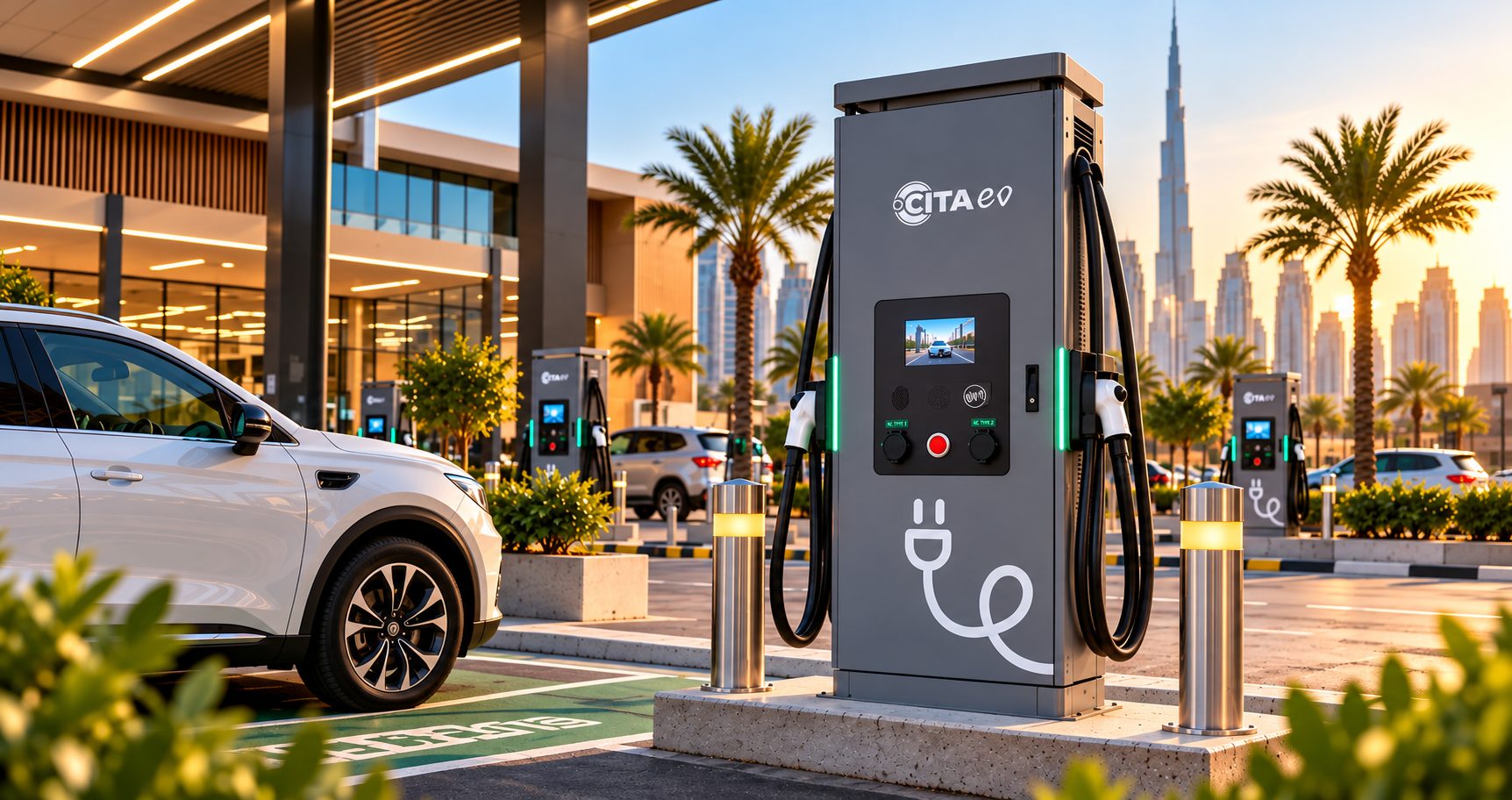
A successful DC fast charging project starts with the right combination of hardware, electrical planning, regulatory compliance, professional installation and intelligent charger management.
CITA EV Charger offers a comprehensive portfolio of AC and DC EV chargers, including 7kW, 11kW and 22kW AC chargers, 44kW Dual AC charging, and DC fast chargers from 40kW up to 480kW. Combined with the CITA EV App, CPMS and technical support, these solutions can support workplaces, hotels, fleets, commercial properties and public charging infrastructure.
If you are preparing to Install a DC Fast EV Charger in the UAE, our team can help you identify a solution based on your site capacity, charging demand and future expansion plans.
Planning a new EV charging project?
Contact CITA EV Charger for a free consultation and explore the right AC or DC charging solution for your UAE site.
Approval requirements depend on the emirate, charger type and whether the station is private or publicly accessible. In Dubai, public EV charging infrastructure is regulated by DEWA, and DC chargers outside certain restricted-access categories require specific approval. Always confirm requirements with the relevant local authority before installation.
The required electrical capacity depends mainly on the charger’s rated output, number of charging points and simultaneous usage. High-power DC chargers may require electrical upgrades, additional distribution equipment or transformer capacity. A professional site assessment should therefore be completed before selecting the final DC fast charger capacity.
There is no fixed timeline. A straightforward installation with sufficient existing electrical capacity can progress faster, while projects requiring utility upgrades, civil works, approvals or new transformers will take longer. When you Install a DC Fast EV Charger in the UAE, proper site assessment and planning can help prevent avoidable delays.
Installation cost depends on charger power, available electrical capacity, cable distance, civil works, distribution equipment, transformer requirements, approvals, networking and software integration. A 40kW installation will have very different infrastructure requirements from a multi-charger, high-power EV charging station in the UAE, so costs should be assessed site by site.
DC fast charging requires specialist electrical knowledge because of its high power and regulatory requirements. In Dubai, EV charging installations must follow DEWA’s applicable technical and regulatory requirements, and electrical work should be handled by appropriately approved professionals. Using an experienced EV charger installation company UAE also helps ensure correct installation, testing and commissioning.