Skip to content







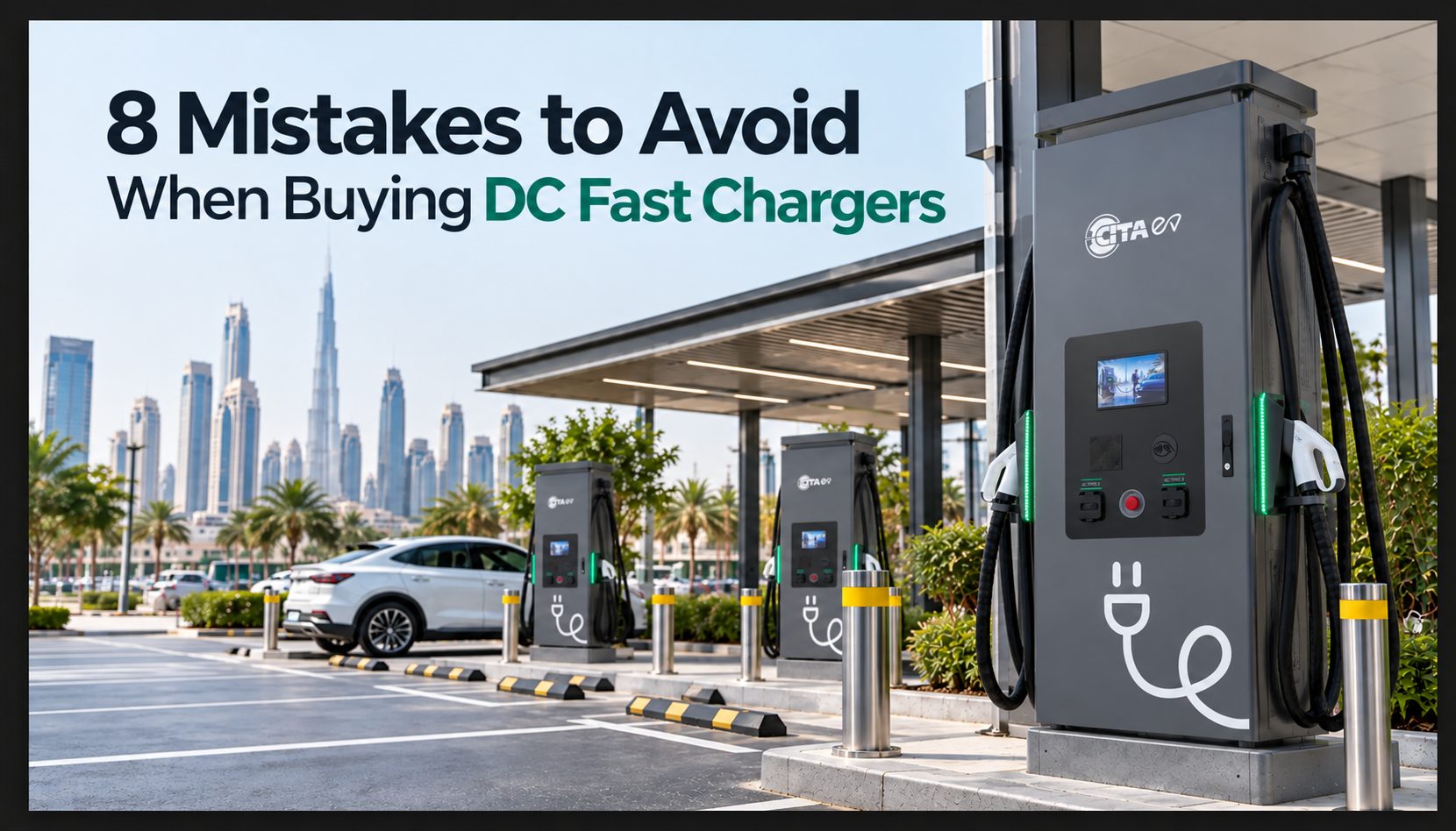
The UAE’s evolving electric mobility market. But choosing a charger based only on maximum power or purchase price can lead to oversized infrastructure, higher electrical costs and poor utilisation.
The UAE’s charging landscape is already moving towards higher-power infrastructure. In January 2026, Abu Dhabi launched the Barq initiative with more than 50 ultra-fast 360kW chargers across strategic locations, while ADNOC Distribution opened a major EV charging hub on the E11 corridor with 60 high-speed charging points.
These developments show how fast-charging infrastructure is expanding beyond basic public charging towards higher-capacity networks designed around different traffic and operational requirements.
For charge point operators, fleets, hotels, shopping destinations, fuel stations and commercial properties, this makes careful planning even more important. The right charger should match actual vehicle demand, site power availability, expected dwell time and future utilisation – not simply offer the highest kW rating available.
What Should You Check Before Buying a DC Fast Charger?
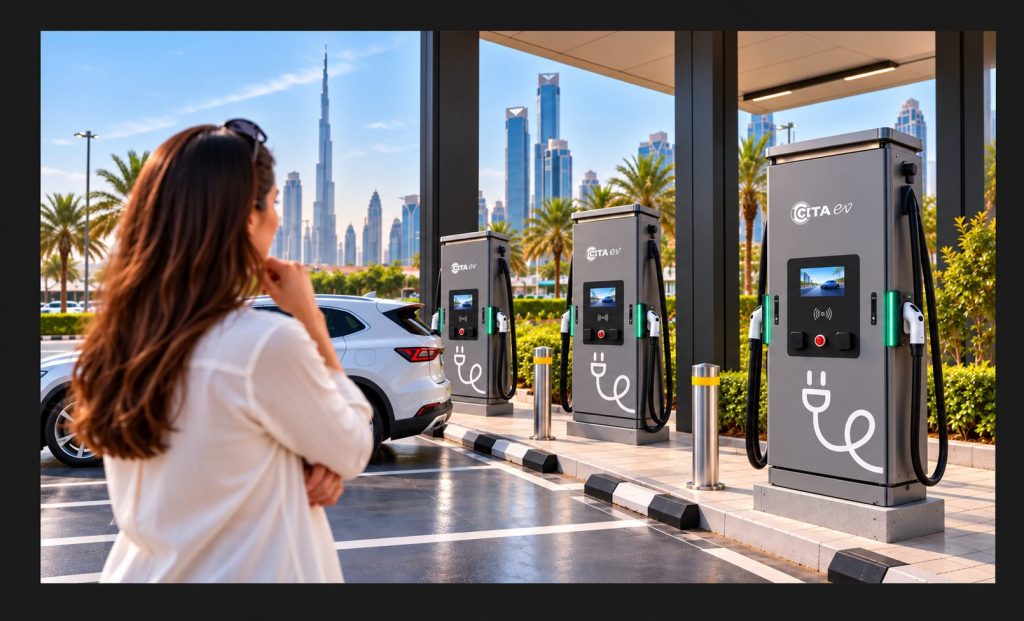
The right charger is not necessarily the one with the highest kW rating. A successful investment balances charging capacity, vehicle compatibility, site power, environmental conditions, software connectivity and future expansion.
Here are eight common mistakes businesses should avoid before purchasing.
1) Choosing Charging Power Without Studying Actual Demand
One of the biggest mistakes is assuming that higher charging power automatically means a better investment.
DC Fast Chargers are available across a wide power range, but the appropriate capacity depends on how the site will operate. A hotel, fleet depot, highway station and shopping centre can have completely different charging patterns.
Study expected daily vehicle numbers, average parking duration, peak-hour demand and required turnaround time. Also consider whether several vehicles will need to charge simultaneously.
Selecting power around actual demand helps prevent paying for capacity that remains underused or installing a charger that quickly becomes inadequate.
2) Ignoring the Vehicle’s Maximum DC Charging Capability
A charger’s advertised output does not mean every electric vehicle will charge at that rate.
Each EV has its own maximum DC charging capability, and charging speed can also change depending on battery temperature and state of charge. Connecting a vehicle with a lower charging limit to a much higher-powered unit will not automatically make it accept the charger’s full output.
Before purchasing high-power EV chargers, study the vehicles most likely to use your location. Fleet operators should pay particular attention to the specifications of their existing and planned vehicles.
Matching charger capability with real vehicle requirements leads to more practical infrastructure planning.
3) Buying the Charger Before Assessing Site Power
The charger is only one part of the investment.
A site may have enough space for a 240kW or 480kW charger but insufficient electrical capacity to operate it effectively. Upgrading transformers, switchgear, cabling and distribution infrastructure can significantly affect the overall project.
Complete an EV charging site assessment before finalising equipment. The assessment should examine available grid capacity, existing electrical load, cable routes, potential simultaneous charging and future expansion.
For multi-charger locations, smart load management can also help distribute available capacity more efficiently rather than allowing every charger to demand maximum power at the same time.
4) Overlooking UAE Climate and Environmental Conditions
Outdoor charging equipment in the UAE has to operate through intense heat, dust and humidity.
This makes environmental specifications an important purchasing consideration rather than a minor technical detail. In Dubai, DEWA’s EV Charging Technical Regulations require charging equipment to operate at full capacity at ambient temperatures of up to 55°C and relative humidity reaching 95%.
When comparing DC Fast Chargers, examine operating temperature limits, enclosure protection, cooling design and overall construction.
A charger that performs well in moderate conditions may not automatically be appropriate for a demanding UAE outdoor installation. Environmental suitability can directly influence reliability, performance and long-term maintenance requirements.
5) Failing to Check Connector and Vehicle Compatibility
Connector compatibility should be confirmed before equipment is ordered.
For public charging infrastructure in Dubai, current DEWA technical regulations specify CCS2 connectors for DC EV charging equipment. Private restricted-access installations have more flexibility, provided applicable electrical requirements are satisfied.
Businesses should therefore understand which EVs are expected to use the station and which charging standards they support.
Choosing compatible commercial EV charging infrastructure reduces the risk of installing expensive equipment that cannot conveniently serve the intended vehicles. For public stations in particular, broad compatibility can improve accessibility and charger utilisation as the UAE’s EV population continues to diversify.
6) Treating Software and Connectivity as Optional Extras
Modern charging infrastructure is both hardware and software.
A charger may deliver excellent electrical performance but still create operational problems if operators cannot remotely monitor it, manage charging sessions, identify faults or connect it with their preferred management platform.
Look for smart EV charging solutions that support recognised communication standards such as OCPP. The Open Charge Alliance explains that OCPP provides standardised communication between charging stations and central management systems, helping improve interoperability between hardware and backend platforms.
CITA EV charging solutions integrate with the CITA EV App and CPMS, enabling connected charger management and monitoring.
For businesses planning multiple sites, software capability becomes even more important as the charging network expands.
7) Buying Only for Today’s Requirements
EV infrastructure should not be planned around current demand alone.
A site that requires one charger today could need several charging points as vehicle numbers increase. Businesses may also need higher charging capacities, additional parking bays or more advanced management capabilities later.
Before purchasing DC Fast Chargers, ask whether the system can support additional units, load management and network expansion. Consider spare electrical capacity, cable routes and physical space during the initial project design.
Scalable infrastructure can make future expansion considerably easier than redesigning the entire site when demand increases.
This is particularly relevant in the UAE, where national policy aims to increase electric and hybrid vehicles to 50% of total vehicles on the road by 2050.
8) Focusing on Purchase Price Instead of Lifetime Support
The cheapest charger is not always the lowest-cost solution over its operating life.
DC charging equipment contains high-power electronics, communication systems, cooling components, connectors and cables that need reliable long-term support. Before buying, understand the warranty period, availability of technical assistance, maintenance requirements, spare parts and expected service response.
Also consider whether the supplier can support installation, commissioning, software configuration and future upgrades.
Reliable EV charger maintenance and support can reduce downtime and protect the value of the charging investment. For commercial and public locations, charger availability matters because an unavailable charger can affect both customer experience and potential charging revenue.
Choose DC Fast Charging Infrastructure Built for Long-Term Demand
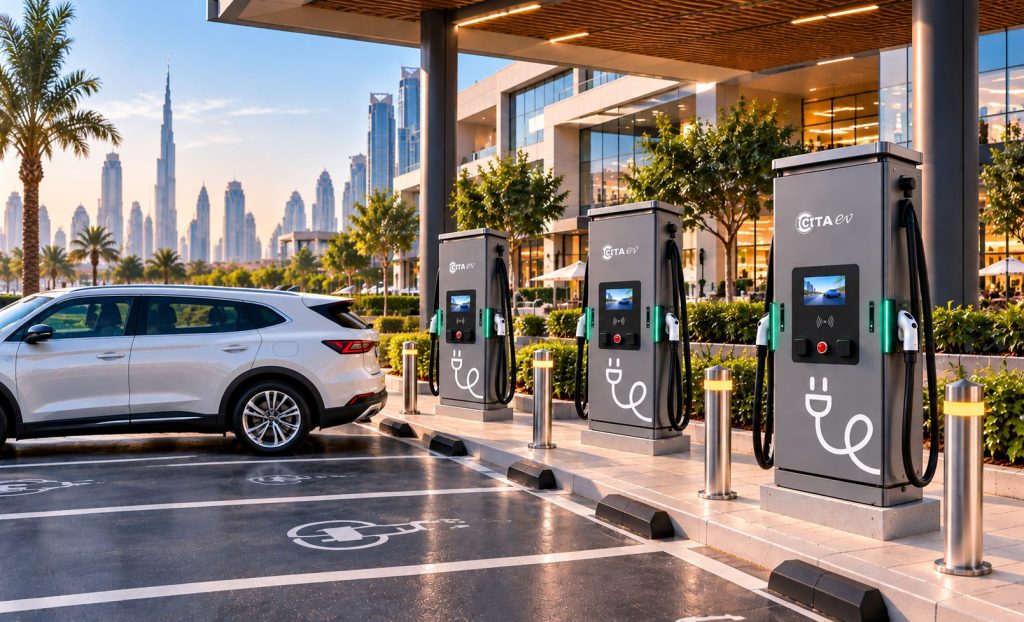
Buying a DC charger should start with understanding your site – not simply comparing the highest power ratings.
The right charging solution brings together suitable power capacity, EV compatibility, UAE-ready hardware, smart software, regulatory compliance, scalability and dependable after-sales support.
CITA EV Charger provides a comprehensive range of AC and DC EV charging solutions, including 7kW, 11kW and 22kW AC chargers, 44kW Dual AC charging and DC Fast Chargers from 40kW up to 480kW. Combined with the CITA EV App, CPMS and ongoing technical support, the range can serve workplaces, fleets, hotels, commercial destinations and public charging infrastructure.
Planning a new EV charging project?
Contact CITA EV Charger for a free consultation and find the right AC or DC charging solution for your site, power capacity and future charging demand.
Look beyond the maximum power rating. Check the charger’s vehicle compatibility, connector type, operating temperature, IP protection, software connectivity, OCPP support, warranty and after-sales service. You should also assess your site’s available electrical capacity before purchasing DC Fast Chargers, especially for high-power commercial or public installations.
The right capacity depends on expected vehicle traffic, average parking time, EV charging capabilities and available site power. A location requiring quick vehicle turnaround may need higher-power charging, while other commercial sites can operate effectively with lower capacities. CITA offers DC Fast Chargers from 40 kW to 480 kW for different charging requirements.
Not necessarily. Every electric vehicle has a maximum DC charging rate, so a car capable of accepting 100kW will not continuously charge at 300kW simply because it connects to a 300kW charger. Battery temperature and state of charge can also affect the actual charging speed achieved during a session.
DC charging is particularly useful for fleet depots, highway locations, public charging stations, fuel stations and high-traffic commercial sites where shorter charging times matter. Hotels, workplaces and destinations with longer parking periods may also benefit from AC charging or a combination of AC and DC chargers based on customer behaviour.
Start with a professional site assessment and choose equipment based on actual and future demand rather than maximum power alone. Businesses should also consider smart load management, scalable electrical infrastructure, remote charger monitoring, preventive maintenance and strong warranty support. These measures can help control infrastructure costs while preparing the charging site for future expansion.