Skip to content







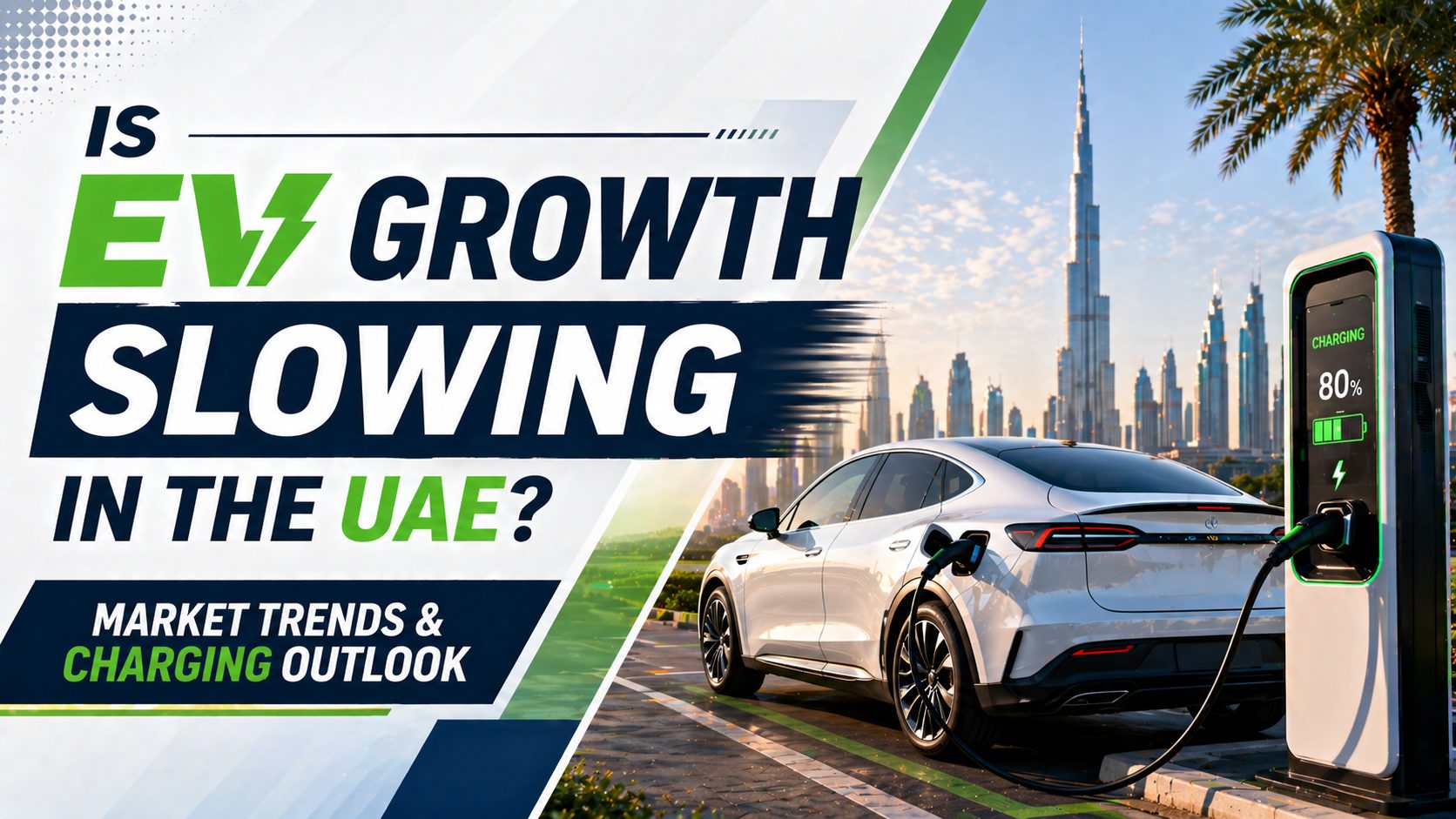
The conversation around EV growth UAE is shifting as recent data suggests a more complex reality behind electric vehicle adoption. While electric mobility remains a key pillar of the country’s long-term sustainability vision, short-term trends indicate a slowdown in momentum.
Recent industry figures show that battery electric vehicle (BEV) sales in the UAE experienced a slight dip, with approximately 11,700 units sold in 2025 compared to 12,400 the previous year. Despite overall car sales increasing, EVs still account for only a small percentage of the total market, highlighting the gap between current adoption and the UAE’s ambitious 2050 electrification targets.
At the same time, hybrid vehicles are gaining traction. Plug-in hybrid electric vehicles (PHEVs) saw a notable rise in sales, reflecting a growing consumer preference for flexibility. Many buyers are opting for solutions that offer electric driving benefits without the concern of range limitations – especially in regions where charging access is still evolving.
One of the key challenges remains infrastructure. Although significant investments are underway, including large-scale charging expansions across Abu Dhabi and Dubai, the network is still developing. Public charging availability, combined with relatively low fuel prices in the UAE, continues to influence purchasing decisions.
However, the long-term outlook remains strong. Government-led initiatives are accelerating the rollout of charging stations across urban and highway locations, while ultra-fast charging technologies are being introduced to improve convenience and reduce charging times.
For the EV ecosystem to scale effectively, reliable and accessible charging infrastructure will play a defining role. This is where solutions like those offered by CITA EV Charger become essential – delivering smart EV charging solutions from 7kW to 480kW, supported by intelligent software such as EV apps and CPMS for seamless energy management.
As the UAE navigates this transition phase, the focus is clear: bridging the gap between ambition and real-world adoption through smarter infrastructure and better user experiences.