Skip to content






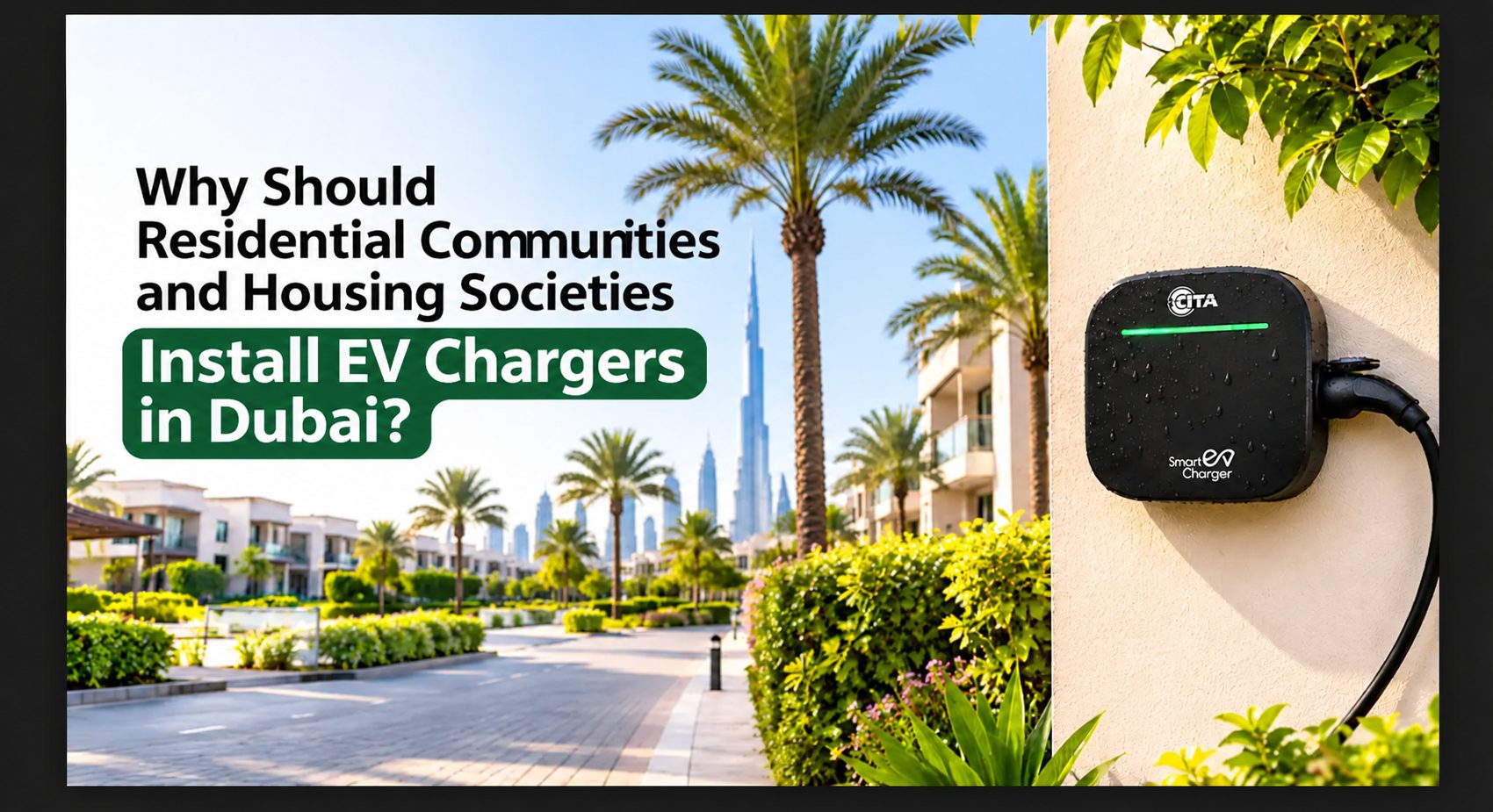
As more residents look to Install EV Chargers in Dubai, residential communities and housing societies are beginning to rethink how parking facilities should accommodate electric vehicles. What was once considered an additional amenity is becoming an important consideration for modern residential infrastructure.
Dubai is actively supporting electric mobility through initiatives such as the Dubai Electricity and Water Authority’s (DEWA) Green Charger programme, which encourages the expansion of EV charging infrastructure across the emirate.
The UAE’s National Electric Vehicles Policy also supports the transition towards cleaner transportation, while Dubai’s building regulations and electrical standards address EV charging provisions in residential and commercial developments.
For apartment complexes, gated communities, villa developments and managed residential properties, EV charging facilities can offer several advantages. They provide greater convenience for residents, support changing transportation needs and help communities prepare for increasing EV adoption.
But why should housing societies invest in charging infrastructure, and what should property managers consider before installation?
Let’s explore.
Why Is EV Charging Becoming Important for Residential Communities in Dubai?
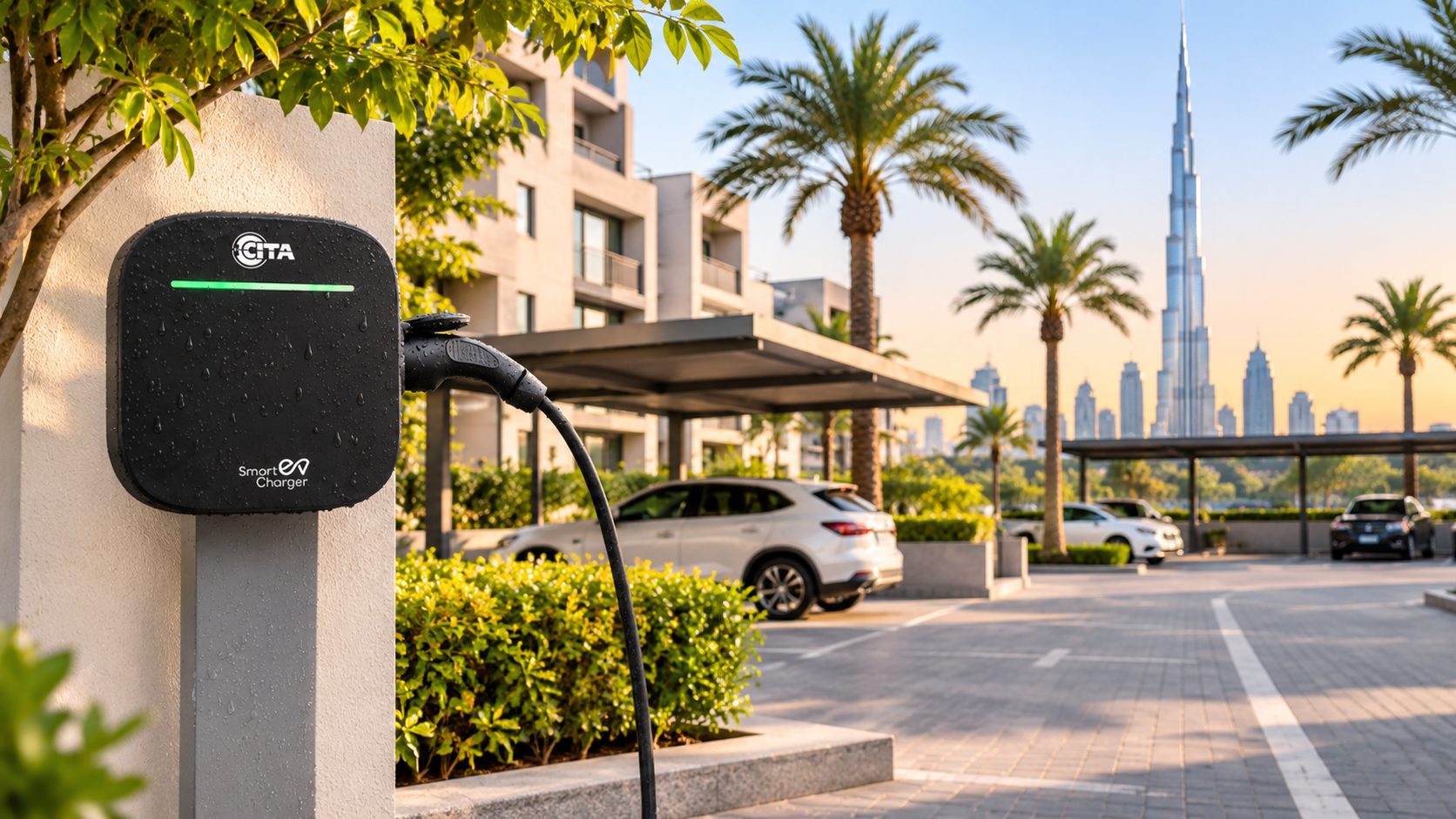
Electric vehicles are changing how residents use their parking spaces.
Unlike petrol or diesel vehicles, EVs can be charged while parked. This makes residential buildings particularly suitable for charging infrastructure because vehicles often remain stationary for several hours, especially overnight.
However, residents living in apartment buildings may not have access to individual charging points. They often depend on public charging stations, which may require additional travel, waiting time or adjustments to their daily schedules.
Installing residential EV charging stations helps address these challenges by making charging accessible within the community.
For property developers and homeowners’ associations, this also creates an opportunity to modernise existing facilities and introduce amenities that respond to evolving resident expectations.
8 Reasons Residential Communities Should Install EV Chargers in Dubai
As electric vehicle adoption continues to grow across Dubai, residential communities are recognising the importance of accessible charging infrastructure.
From improving resident convenience to supporting sustainable development, here are eight reasons why housing societies should consider installing EV chargers.
1) EV Demand in Dubai is Already Great and Growing Fast
Dubai’s electric vehicle market is expanding rapidly. According to DEWA, registered EVs reached 47,944 by the end of 2025, compared to 37,486 in 2024, representing 27.9% annual growth.
As more residents switch to electric vehicles, housing societies need accessible charging facilities to accommodate increasing demand and prepare their parking infrastructure for future requirements.
2) Public Charging Can’t Cover What Residents Need at Home
Dubai’s EV charging network expanded to more than 1,860 charging points by early 2026. However, relying entirely on public stations can involve additional travel and waiting time.
Residential EV charging allows residents to recharge their vehicles conveniently overnight, reducing dependence on public infrastructure and making daily electric vehicle ownership easier and more practical.
3) Help Residents Reduce EV Charging Expenses
Residential charging can offer considerable savings compared to public charging stations. DEWA’s registered-user public rates are AED 0.70 per kWh for AC charging and AED 1.20 for DC charging, excluding VAT.
Charging through a residential electricity connection may cost less, depending on applicable tariffs and billing arrangements, helping residents manage their monthly expenses.
4) Apartment Residents Are the Ones Most Stuck Without it
Unlike villa owners, apartment residents often face challenges installing individual EV chargers due to shared parking, electrical limitations and building approvals.
A community-wide charging system can address these concerns through dedicated charging bays, smart load management and individual electricity monitoring, making EV charging more accessible while simplifying infrastructure management for residential property managers.
5) Improve Property Appeal and Attract Potential Tenants
EV charging facilities are becoming an increasingly valuable residential amenity in Dubai. Properties offering convenient charging access may appeal more to EV-owning tenants and prospective buyers.
For older residential developments, installing modern charging infrastructure can improve competitiveness, enhance resident satisfaction and help properties remain attractive as electric vehicle ownership continues to increase.
6) Ensure Safer Charging and Better Electricity Management
Installing EV chargers through a professionally designed system helps residential communities maintain electrical safety and manage charging demand efficiently. Smart charging technology, including dynamic load balancing and usage monitoring, distributes available electrical capacity across multiple chargers.
This reduces the risk of electrical overloads and helps buildings accommodate growing EV demand without unnecessary infrastructure upgrades.
7) Explore Flexible Investment and Revenue Opportunities
Residential communities can explore different EV charging investment models, including partnerships with appropriately licensed Charge Point Operators. Depending on the arrangement, operators may manage installation, maintenance, billing and charging services.
Such partnerships can help reduce upfront financial commitments while providing opportunities for cost recovery, subject to applicable DEWA licensing requirements and commercial agreements.
8) Support Dubai's Long-Term Sustainable Mobility Goals
Installing EV chargers in Dubai supports the emirate’s Green Mobility Strategy 2030 and the UAE’s broader sustainability ambitions. As electric vehicle adoption increases, residential communities equipped with scalable charging infrastructure will be better prepared for future demand.
Early planning can also minimise costly retrofitting and support the transition towards cleaner transportation across Dubai’s residential developments.
Which EV Chargers Are Suitable for Residential Communities in Dubai?
When planning to Install EV Chargers in Dubai, choosing the correct charging capacity is essential.
Residential properties generally benefit from AC charging because vehicles remain parked for extended periods. DC chargers may be useful in larger developments with visitor parking or higher vehicle turnover.
| Charger type | Power capacity | Suitable application |
|---|---|---|
| AC home charger | 7 kW | Villas and dedicated residential parking |
| AC smart charger | 11kW | Apartment parking and shared residential spaces |
| AC commercial charger | 22 kW | Residential complexes and visitor parking |
| Dual AC charger | 2 × 22 kW | Housing societies with multiple EV users |
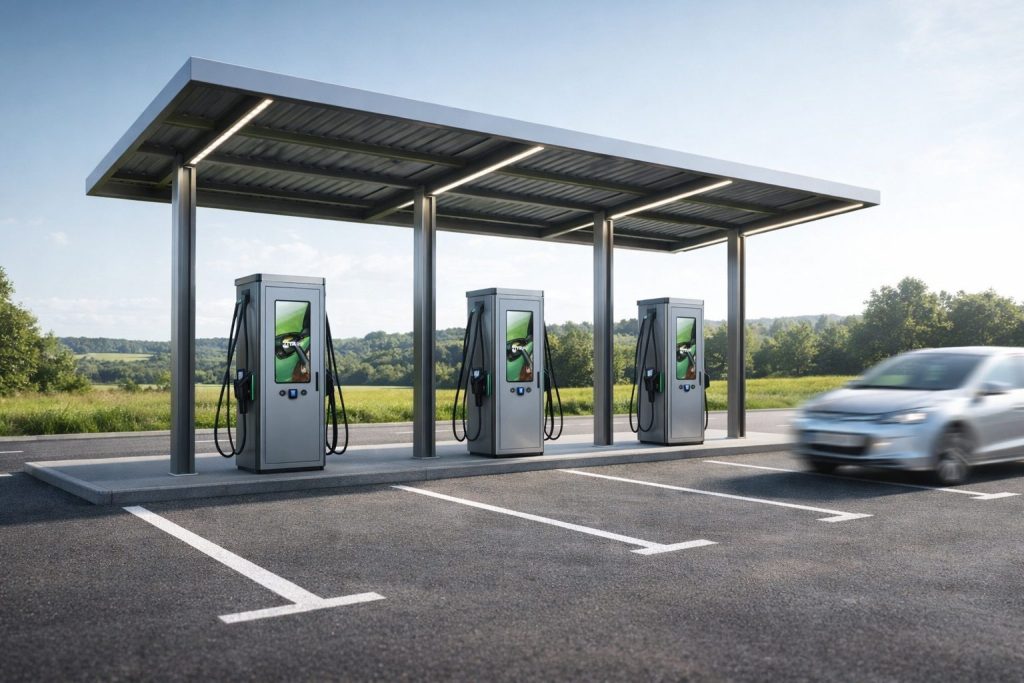
| Compact DC charger | 30 kW | Premium residential developments and faster visitor charging |
Charging performance depends on the vehicle, electrical supply and site configuration. Higher-rated AC equipment does not automatically mean faster charging if the vehicle cannot accept the full power.
For most communities, a combination of 7 kW, 11 kW and 22 kW AC chargers can accommodate regular residential charging needs.
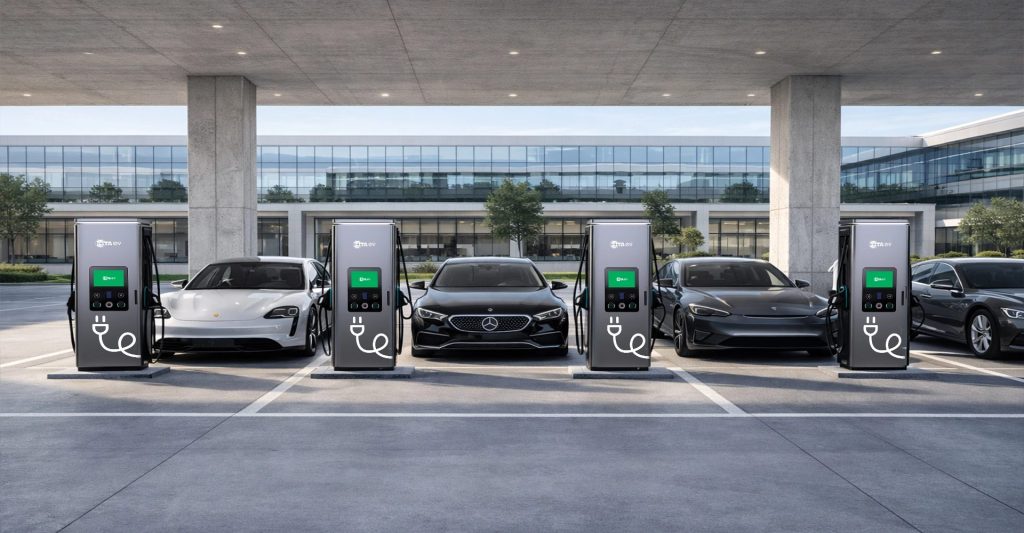
Larger housing societies may consider dual-output charging stations to serve multiple parking spaces efficiently.
What Should Housing Societies Consider Before EV Charger Installation?
Before beginning EV charger installation in Dubai, property managers should evaluate the site’s electrical infrastructure, parking layout and expected demand.
Important considerations include:
- Electrical capacity: Assess the building’s available electrical supply and whether upgrades are necessary.
- Parking arrangements: Identify dedicated and shared spaces, cable routes and safe charger locations.
- Charger compatibility: Choose equipment supporting commonly used vehicle connectors and appropriate charging capacities.
- Smart management: Consider load balancing, access control, usage monitoring and individual billing.
- Safety and durability: Review relevant certifications, electrical protections, IP ratings and suitability for Dubai’s climate.
- Maintenance: Establish responsibility for inspections, repairs, software updates and technical support.
For existing residential developments, a professional site assessment can help determine the most practical installation approach.
How Can Residential Communities Plan EV Charging Infrastructure?
A successful installation begins with understanding how residents will use the chargers.
Step 1: Assess Resident Demand
Survey residents to determine how many already own EVs, how many plan to purchase one and whether they require dedicated or shared charging.
Step 2: Conduct an Electrical Site Assessment
Have a qualified professional evaluate available electrical capacity, distribution boards, parking arrangements and potential installation locations.
Step 2: Conduct an Electrical Site Assessment
Have a qualified professional evaluate available electrical capacity, distribution boards, parking arrangements and potential installation locations.
Step 4: Establish Access and Billing Rules
Decide who can use the chargers, how charging sessions will be monitored and how electricity costs will be allocated.
Step 5: Plan for Expansion
Reserve space and consider infrastructure provisions for additional charging points as demand increases.
This structured approach helps communities avoid overspending on unnecessary equipment while reducing the risk of installing infrastructure that becomes insufficient too quickly.
Build EV-Ready Residential Communities with CITA EV Charger
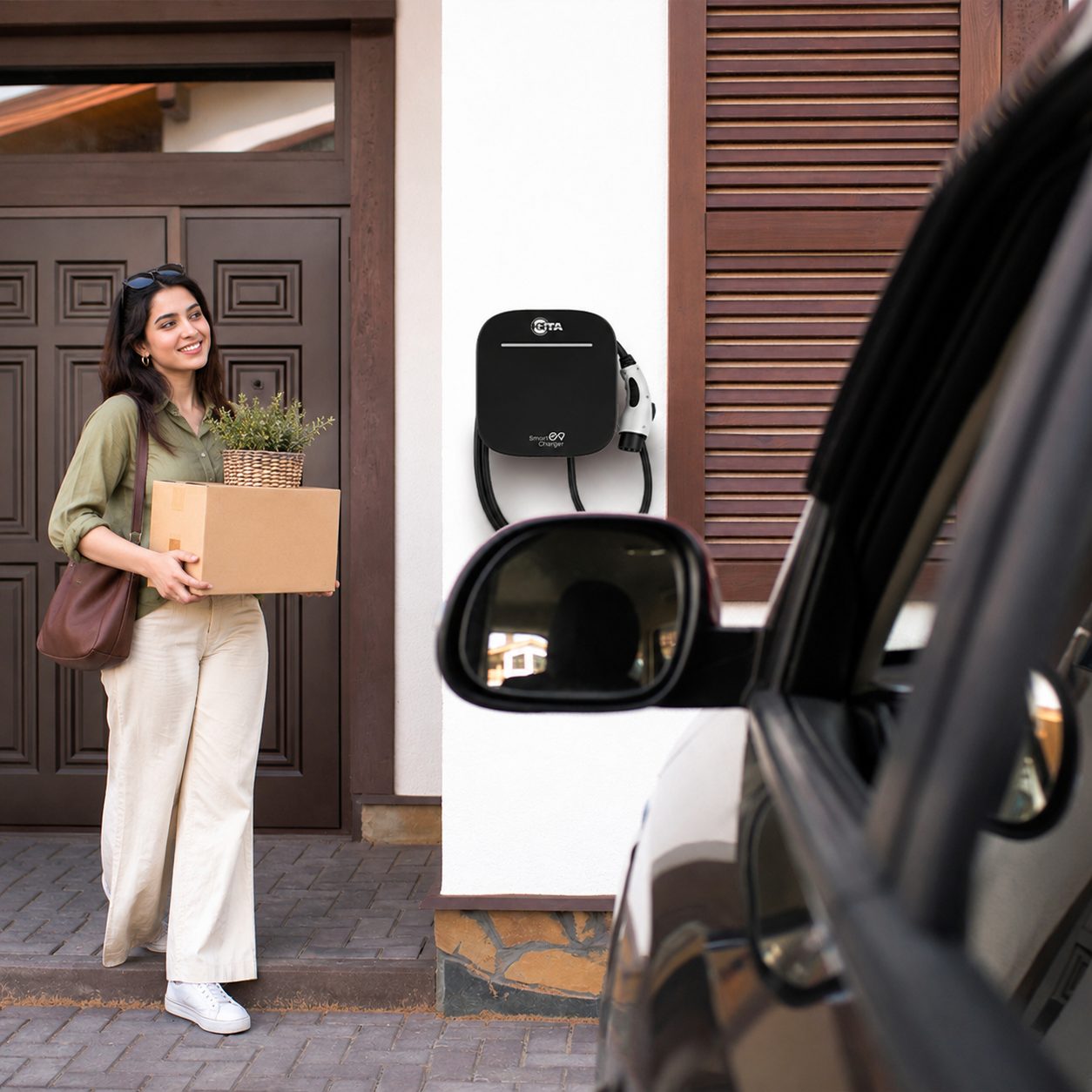
As electric mobility continues to develop across Dubai, residential charging infrastructure is becoming an increasingly useful feature for apartments, gated communities and housing societies.
Communities that Install EV Chargers in Dubai can provide convenient overnight charging, improve resident amenities, support smarter electricity management and prepare their properties for future EV adoption.
Choosing suitable charging equipment is an important part of this process.
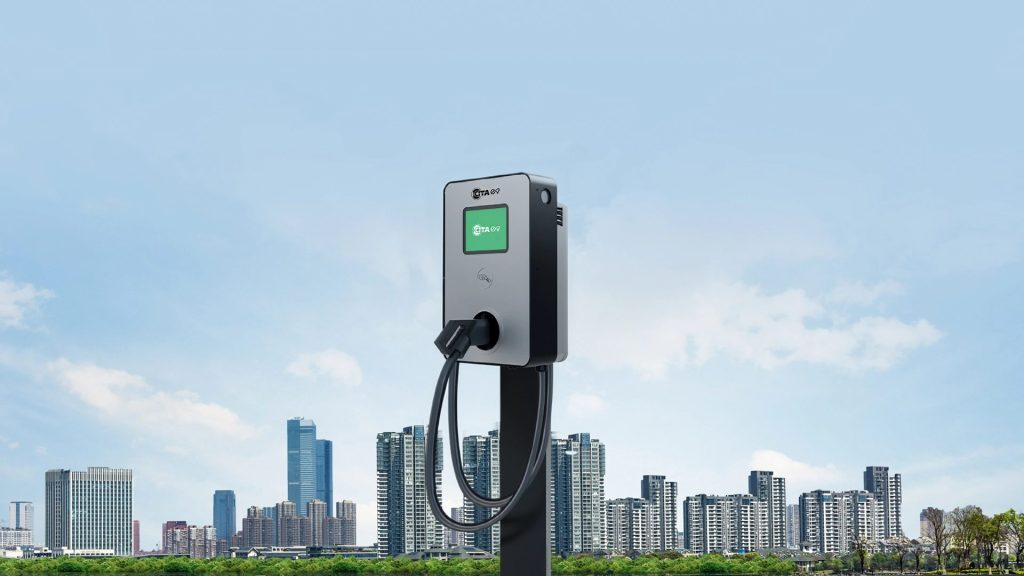
CITA EV Charger offers a range of AC and DC charging solutions, including 7 kW, 11 kW and 22 kW smart AC chargers, 44 kW dual-output AC charging stations and DC fast charging equipment for larger developments.
With smart charging features, connectivity options and charging management capabilities, these solutions can support different residential and shared-parking requirements.
Planning EV charging infrastructure for your residential community in Dubai?
Explore CITA EV Charger’s AC and DC charging solutions and contact the team for a consultation on suitable equipment, charging capacities and your community’s future requirements.
Yes. Apartment buildings can install EV charging equipment, subject to applicable building permissions, electrical requirements and DEWA procedures. Property managers should arrange a site assessment and confirm whether dedicated or shared charging infrastructure is more appropriate.
Installation costs depend on charger capacity, the number of charging points, cable distances, electrical upgrades, civil works and software requirements. A multi-charger installation with load balancing and individual billing may cost more than a basic single-charger setup. A site-specific quotation is necessary for accurate pricing.
For many apartment buildings, 7 kW, 11 kW or 22 kW AC chargers are practical options because residents typically park for several hours. Dual-output AC chargers can be useful where multiple residents need access to shared charging facilities.
Residential communities may establish charging-cost arrangements, but the applicable rules depend on the charging system, metering structure and whether the service falls under DEWA’s public charging operator licensing framework. Property managers should verify the regulatory requirements before implementing paid charging.
Charging time depends on battery capacity, starting charge level, vehicle onboard charger and charging power. For example, adding 40 kWh of energy would theoretically take around 5.7 hours at 7 kW or 1.8 hours at 22 kW. Actual charging can take longer, and many vehicles cannot accept 22 kW AC power.