Skip to content







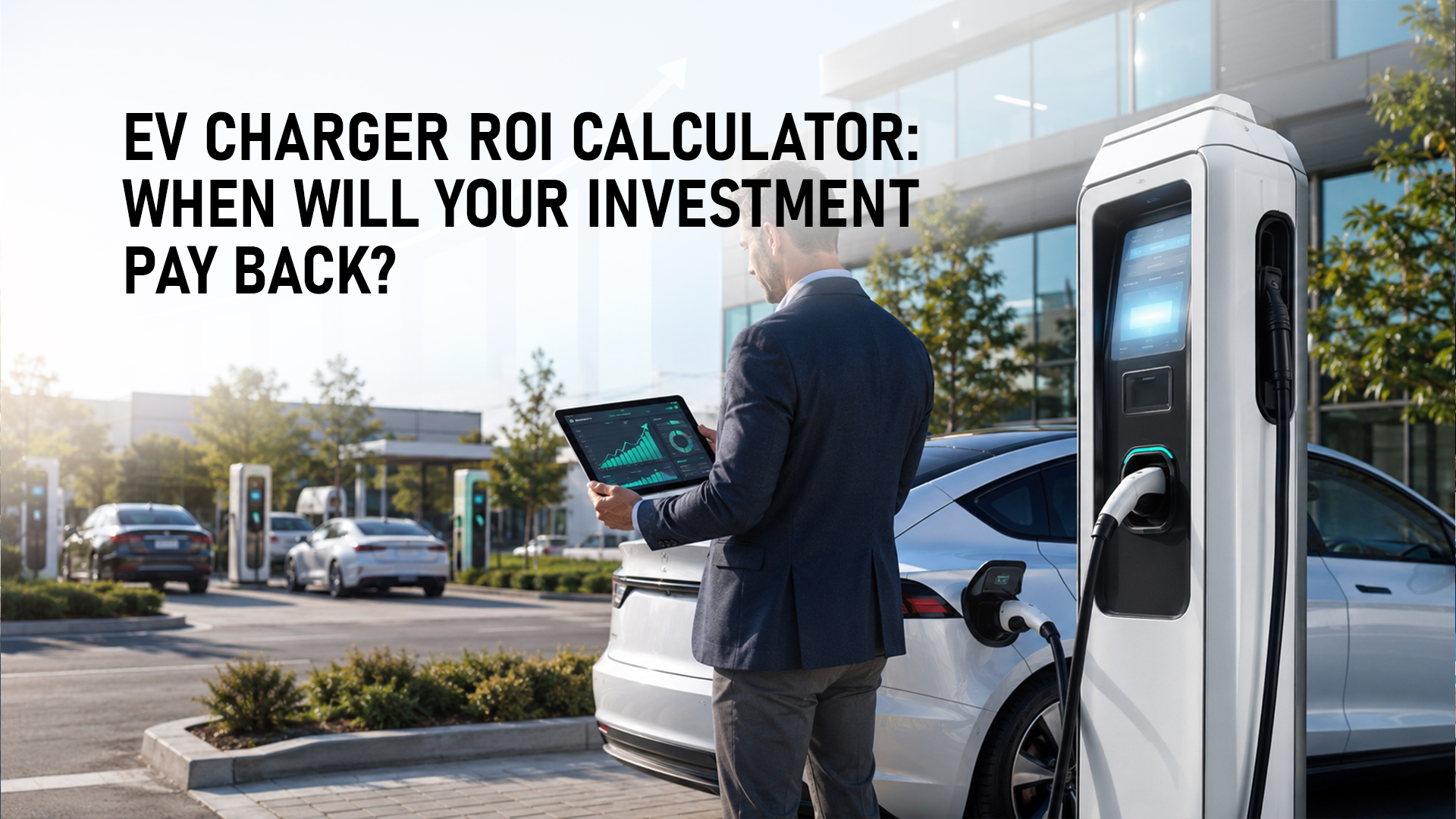
EV Charger ROI is one of the first metrics every business should evaluate before investing in EV charging infrastructure. Whether you’re installing EV chargers at a commercial property, fleet depot, hotel, retail destination, office building, or public charging station, understanding when your investment will start generating returns is essential for making informed financial decisions.
The UAE is rapidly becoming one of the Middle East’s leading electric mobility markets. Government initiatives, growing EV adoption, expanding charging infrastructure, and ambitious sustainability goals are encouraging more businesses to invest in EV charging. Dubai alone has significantly expanded its public charging network in recent years, while both public and private organisations continue to invest in charging infrastructure to support the country’s transition towards cleaner transportation.
However, purchasing an EV charger is only the beginning. The real question every investor should ask is: “How long will it take to recover the investment?”
This is where an EV Charger ROI Calculator becomes valuable. Rather than simply estimating profits, it helps businesses evaluate project costs, expected revenue, operating expenses, utilisation rates, and overall financial performance before making an investment.
Why EV Charger ROI Is Becoming More Important

Just a few years ago, installing EV chargers was often viewed as part of a company’s sustainability strategy or corporate social responsibility initiative. Today, the landscape has changed considerably.
For many businesses across the UAE & GCC region, EV charging has become a commercial investment capable of generating revenue, attracting customers, supporting fleet operations, and increasing property value.
Businesses, including:
- Hotels
- Shopping malls
- Fuel stations
- Commercial office buildings
- Residential communities
- Fleet operators
- Logistics companies
- Public parking facilities
are increasingly evaluating EV charging investment opportunities as demand for electric vehicle charging continues to grow.
What is EV Charger ROI?

EV Charger ROI (Return on Investment) measures the financial return generated by an EV charging project compared to the total investment. It helps businesses understand whether installing EV chargers is financially worthwhile and estimate how long it may take to recover their investment.
An EV charger ROI calculator is a financial planning tool that estimates this return by analysing key factors such as
- Total project investment
- EV charger installation costs
- Expected charging revenue
- Electricity and operating costs
- Charger utilisation
- Net cash flow
- Estimated payback period
When evaluating an EV charging project, it’s also important to understand the difference between ROI and payback period.
| ROI | Payback Period |
|---|---|
| Measures the overall profitability of the investment. | Measures how long it takes to recover the initial investment. |
| Expressed as a percentage (%). | Expressed in months or years. |
| Focuses on long-term returns. | Focuses on investment recovery time. |
Using both metrics together provides a clearer picture of the financial performance and long-term value of an EV charging investment.
How Does an EV Charger ROI Calculator Work?

Although every project is different, most ROI calculations follow the same basic process.
Let’s look at each step individually.
Step 1: Calculate Your Total EV Charging Investment
Many businesses make the mistake of calculating ROI using only the purchase price of the charger.
In reality, the charger itself is only one component of the overall investment.
A complete EV charging investment may include several additional costs that should be considered during planning.
| Investment Component | Description |
|---|---|
| EV charging equipment | AC or DC charging hardware |
| Electrical upgrades | Switchgear, transformers, cabling, and protection systems |
| Civil works | Trenching, foundations, parking modifications, and bollards |
| EV Charger Installation | Labour, testing, and commissioning |
| Charging software | CPMS, payment integration, and remote monitoring |
| Network connectivity | Internet or SIM connectivity |
| Project approvals | Site surveys and technical documentation |
| Initial marketing | Signage and customer guidance |
| Contingency | Unexpected project expenses |
Including all project-related costs produces a much more realistic ROI calculation and helps avoid unexpected financial surprises later.
Step 2: Estimate Charging Demand
The next step is estimating how frequently the charger is likely to be used.
This is often referred to as “charger utilization,” and it is one of the biggest factors affecting EV charging station ROI.
Several questions should be considered:
- How many EVs visit the location each day?
- How long do customers usually stay?
- How much energy does each vehicle typically require?
- Is charging demand consistent throughout the week?
- Will demand increase over the coming years?
For example, a shopping mall may experience higher charging demand during weekends, while fleet operators may primarily charge vehicles overnight.
Estimating realistic usage patterns provides a more accurate prediction of future revenue.
Step 3: Estimate Charging Revenue
Once expected charging demand has been estimated, businesses can calculate potential charging revenue.
Revenue generally depends on three main factors:
- Number of charging sessions
- Average electricity delivered per session
- Charging price per kWh
A simple calculation looks like this:
Monthly Revenue = Total Energy Sold × Charging Price per kWh
For example:
- 300 charging sessions per month
- Average of 35 kWh delivered per session
- Customer charging price of AED 1.20 per kWh
Monthly energy delivered:
300 × 35 = 10,500 kWh
Estimated monthly charging revenue:
10,500 × AED 1.20 = AED 12,600
While this provides an estimate of gross revenue, it does not represent profit. Operating costs still need to be deducted before calculating the actual return on investment.
Step 4: Calculate Operating Costs
One of the most overlooked aspects of ROI calculations is ongoing operating expenses.
Many investors assume electricity is the only recurring cost. In reality, operating commercial EV chargers involves several additional expenses.
Typical operating costs include:
- Electricity consumption
- Charging management software subscriptions
- Network connectivity
- Preventive maintenance
- Equipment servicing
- Spare parts
- Payment gateway fees
- Insurance
- Cleaning and site maintenance
- Customer support
These recurring costs directly affect profitability and should always be included in any EV charger ROI calculation.
Step 5: Calculate Net Cash Flow
After estimating revenue and operating costs, businesses can calculate their expected net cash flow.
The basic formula is:
Net Cash Flow = Charging Revenue − Operating Costs
For example:
| Description | Monthly Value |
|---|---|
| Charging Revenue | AED 12,600 |
| Electricity Cost | AED 4,200 |
| Software & Connectivity | AED 700 |
| Maintenance | AED 600 |
| Other Operating Costs | AED 500 |
| Estimated Net Cash Flow | AED 6,600 |
This figure represents the amount available to recover the original investment.
Higher charger utilisation generally results in stronger cash flow and a shorter payback period.
Step 6: Calculate the Payback Period
The final step is estimating how long it will take to recover the total investment.
The simplest formula is:
Payback Period = Total Investment ÷ Annual Net Cash Flow
Suppose:
- Total project investment = AED 250,000
- Annual net cash flow = AED 79,200
The estimated payback period would be:
AED 250,000 ÷ AED 79,200 = Approximately 3.2 years
Although this is a simplified calculation, it provides investors with a practical estimate of when their charging project may begin generating positive financial returns.
What Factors Have the Biggest Impact on EV Charger ROI?
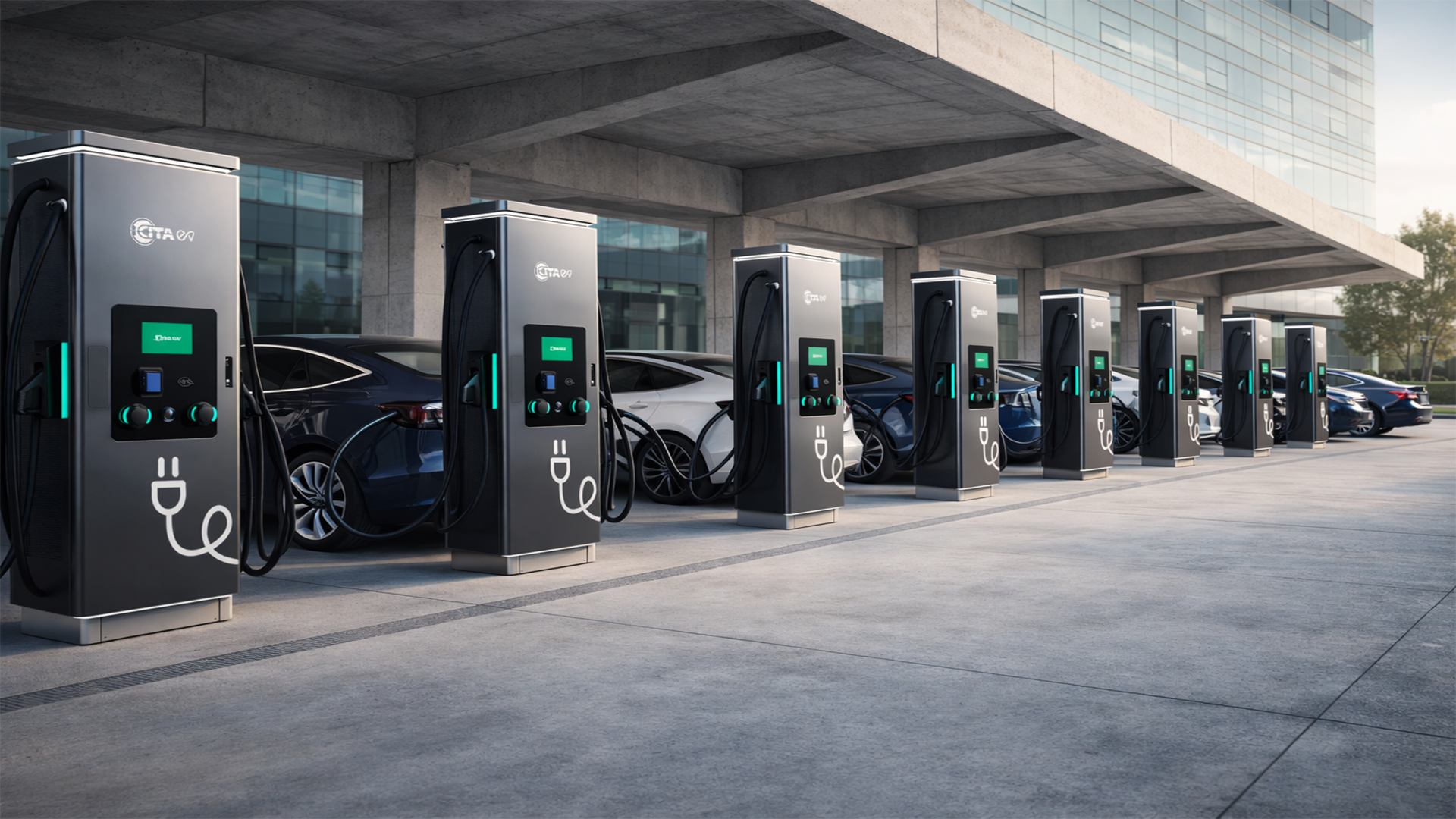
Every EV charging project is different, and several factors can influence how quickly an investment generates returns. While an EV Charger ROI Calculator provides an estimate, understanding these variables helps businesses make informed decisions and maximise long-term profitability.
1) EV Charger Utilisation
EV charger utilization is one of the biggest factors affecting EV Charger ROI. Simply put, the more frequently a charger is used, the faster it can recover its investment.
Many businesses assume that higher-powered chargers automatically deliver better returns. However, a charger with consistent daily usage often generates greater revenue than a larger charger that remains underutilised. Understanding customer demand, traffic patterns, and charging behaviour is therefore just as important as selecting the charger itself.
2) Location of the Charging Station
Location plays a critical role in determining charger utilisation and revenue. Installing chargers where EV drivers naturally spend time increases the likelihood of regular usage.
Ideal locations include shopping centres, hotels, fuel stations, business parks, office buildings, fleet depots, residential communities, and public parking facilities. Choosing the right location often has a greater impact on EV Charging Station ROI than simply investing in a higher-powered charger.
3) Choosing the Right Charger Type
The most powerful charger isn’t always the most profitable. The right solution depends on how long vehicles remain parked and the charging requirements of the site.
For example, AC chargers are well suited for workplaces, hotels, and residential developments where vehicles stay for several hours. A DC Fast Charger is generally a better choice for fuel stations, fleet depots, logistics centres, and public charging hubs that require faster vehicle turnaround.
4) Electricity Costs
Electricity is one of the largest ongoing operating expenses and has a direct impact on profitability.
Businesses should consider electricity tariffs, charging schedules, peak and off-peak pricing, and energy management strategies when estimating returns. Using smart charging software to optimise energy consumption can further improve operational efficiency and maximise long-term ROI.
5) Pricing Strategy
The pricing model used for charging services also influences overall returns. Businesses may choose to charge customers on a pay-per-kWh, pay-per-session, or subscription basis, while others may offer complimentary charging as a value-added service.
Selecting the right pricing strategy depends on your business objectives and customer expectations, helping maximise both revenue and customer satisfaction.
6) Maintenance and Charger Uptime
A charger only generates revenue when it is operational. Frequent downtime caused by equipment failures or delayed maintenance can significantly reduce profitability.
When selecting a supplier, consider factors such as product reliability, remote diagnostics, software updates, preventive maintenance, warranty coverage, and after-sales support. Higher charger uptime leads to more charging sessions, improved customer experience, and stronger EV Charger ROI over the long term.
Beyond Charging Revenue: Hidden Business Benefits
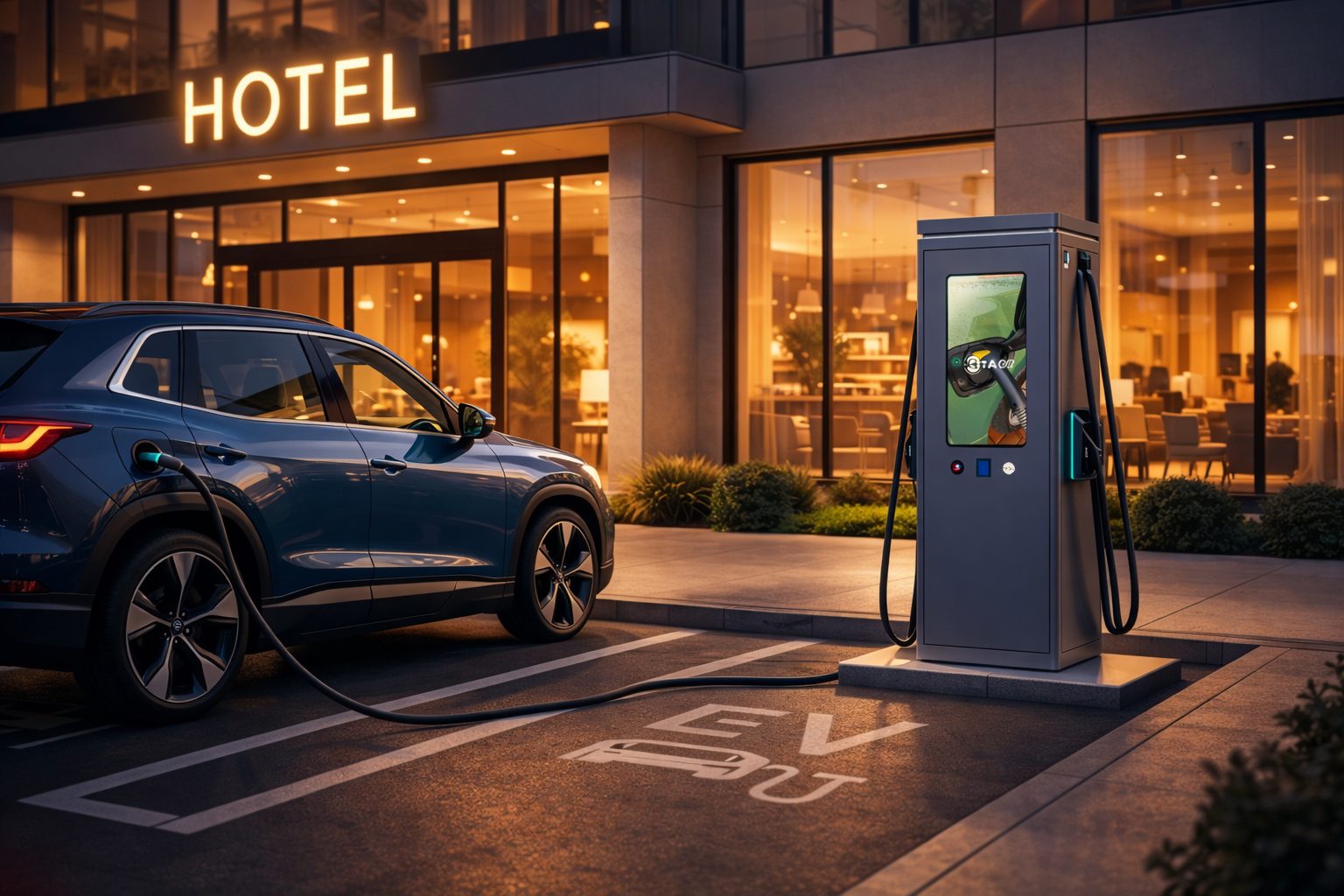
One of the most common misconceptions is that EV charger ROI comes solely from charging fees. In reality, EV charging can create significant indirect business value that contributes to the overall return on your EV charging investment.
Businesses can benefit in several ways:
- Hotels & Resorts: Attract more EV-driving guests and enhance the overall guest experience.
- Shopping Centres & Retail Stores: Encourage longer customer visits, which can lead to increased retail spending.
- Restaurants & Cafés: Extend customer dwell time, creating more opportunities for additional purchases.
- Commercial Offices: Offer a valuable workplace amenity while supporting employee satisfaction and sustainability goals.
- Residential Communities: Increase property appeal by providing future-ready charging facilities for residents.
- Fleet Operators: Reduce fuel and operating costs while improving vehicle availability through convenient on-site charging.
When evaluating EV Charger ROI, it’s important to look beyond direct charging revenue. Increased customer footfall, improved property value, enhanced brand reputation, stronger customer loyalty, and greater operational efficiency can all contribute to a higher long-term return on investment.
How to Maximise Your EV Charger ROI
Improving EV Charger ROI starts with making informed decisions before and after installation. Following these best practices can help increase utilisation, improve operational efficiency, and maximise long-term returns:
- Choose the right charger capacity based on expected demand rather than the highest power output.
- Install chargers in high-traffic locations where EV usage is likely to be higher.
- Use smart charging software to monitor performance, energy usage, and charger utilisation.
- Minimise downtime through regular maintenance and remote monitoring.
- Review performance regularly to optimise pricing, usage, and operational costs.
- Plan for future expansion by investing in scalable charging infrastructure that can grow with demand.
Build a Smarter EV Charging Investment with CITA EV Charger
Understanding EV Charger ROI is essential for making confident, long-term investment decisions. By evaluating factors such as installation costs, charger utilisation, operating expenses, location, and future scalability, businesses can gain a clearer picture of when their investment is likely to pay back. A well-planned charging strategy not only improves financial returns but also supports sustainable growth and prepares businesses for the increasing demand for electric mobility across the UAE.
At CITA EV Charger, we offer intelligent EV charging solutions ranging from 30 kW to 480 kW, designed for commercial properties, fleets, hospitality, retail, workplaces, and public EV charging projects. Backed by advanced software, expert engineering, professional installation support, and reliable after-sales service, our solutions are built for long-term performance.
Contact our team today for a free consultation, and let us help you choose the right EV charging solution to maximise your investment.