Skip to content







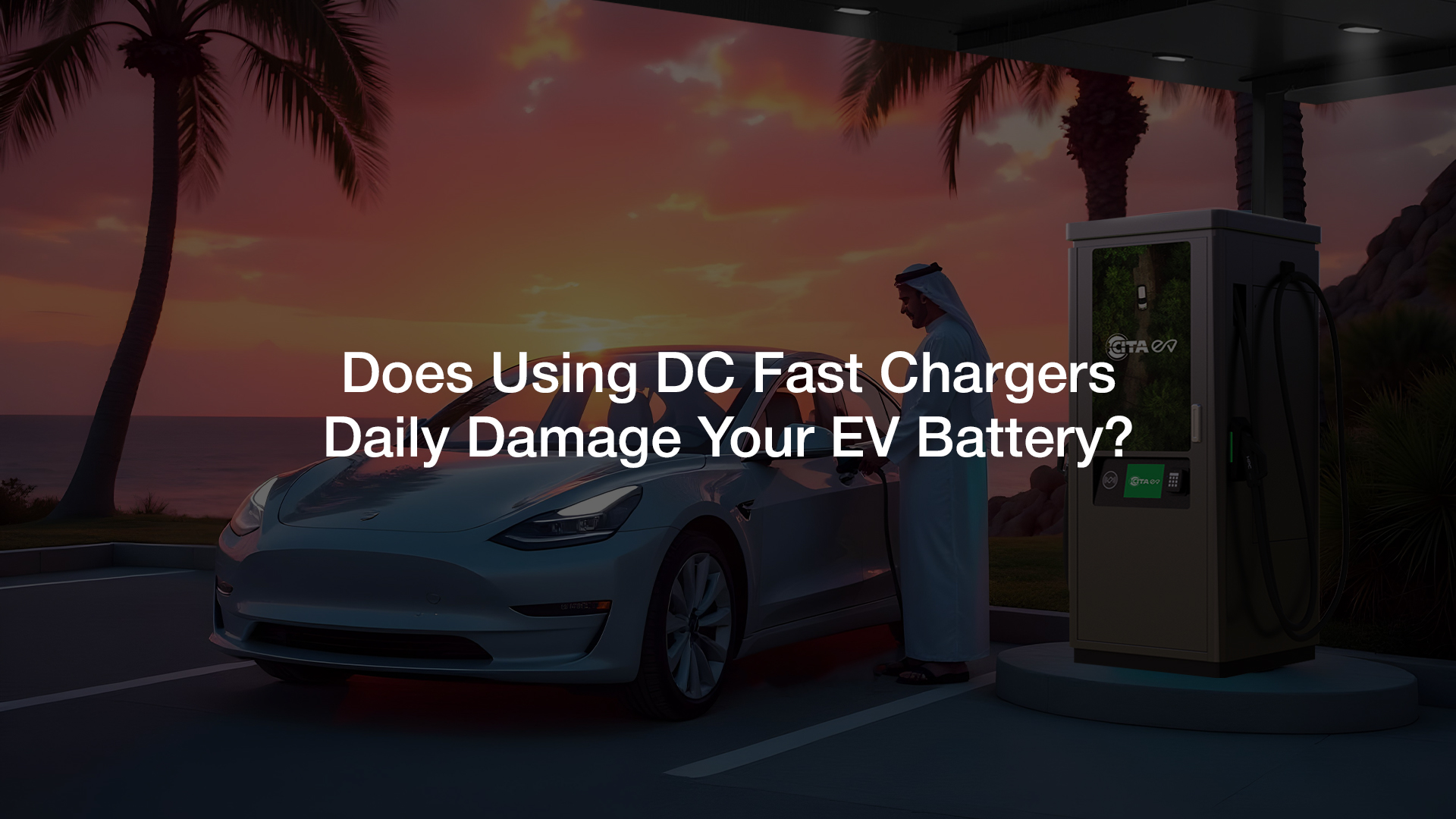
Using DC Fast Chargers every day does not automatically mean your EV battery will suffer serious damage. Modern electric vehicles are designed to accept fast charging, with sophisticated Battery Management Systems (BMS) and thermal controls regulating charging power and battery temperature. However, how frequently you fast charge, the charging power used, battery temperature and how long the battery remains at extreme states of charge can influence long-term EV battery health.
This question is especially relevant in the UAE, where high ambient temperatures coincide with rapidly expanding high-power charging infrastructure.
Dubai ended 2025 with 47,944 EVs, up 27.9% from the previous year, while its charging network had expanded to more than 1,860 charging points. The city is also encouraging private charging infrastructure through DEWA’s licensing framework for independent Charge Point Operators (CPOs).
As DC Fast Chargers become more accessible across Dubai and the wider UAE, drivers and fleet operators need a more precise answer than simply “fast charging damages batteries”.
The evidence suggests a more balanced conclusion: fast charging is a normal and valuable part of EV operation, but frequent reliance on very high charging power can increase battery degradation over time.
What Actually Happens During DC Fast Charging?

An EV battery stores DC electricity.
With an AC charger, electricity from the grid enters the vehicle as alternating current, and the EV’s onboard charger converts it into DC before it reaches the battery.
A DC fast charger performs this conversion outside the vehicle and supplies DC electricity directly to the battery. This allows significantly higher charging power than typical residential AC charging.
The actual charging speed, however, is determined by more than the charger’s advertised kW rating. It depends on:
- EV maximum DC charging capability
- Battery State of Charge (SoC)
- Battery temperature
- Battery chemistry
- Vehicle charging curve
- Battery Management System
- Charger output and power availability
An EV connected to a 200kW charger, for example, does not necessarily receive 200kW throughout the session.
Charging power typically changes as the battery fills. The vehicle’s BMS continuously manages the process to protect battery temperature, voltage and overall operating conditions.
This is one reason modern fast EV charging should not be treated as uncontrolled high-power delivery.
Does Frequent DC Fast Charging Increase Battery Degradation?

Some battery degradation is unavoidable.
Every lithium-ion battery gradually loses usable capacity as it ages and completes charging cycles. The relevant question is whether frequent DC Fast Chargers use significantly accelerates that process.
Recent real-world evidence provides useful context.
Geotab’s updated battery-health analysis examined data from more than 22,700 electric vehicles across 21 models. It found average battery degradation of approximately 2.3% per year across the dataset.
But charging behaviour produced noticeable differences.
| Charging Pattern | Average Annual Degradation in Geotab Data |
|---|---|
| Low DC fast-charging frequency | ~1.5% |
| Higher DCFC frequency, predominantly lower power | ~2.2% |
| Higher DCFC frequency with frequent >100kW charging | ~3.0% |
Geotab classified low-frequency DCFC users as vehicles where fast charging represented less than 12% of charging sessions. Among higher-frequency users, vehicles with greater exposure to charging above 100kW showed the highest average degradation.
This does not mean every EV frequently using a high-power charger will lose exactly 3% of capacity each year. Battery design, chemistry, age, climate, driving patterns and thermal management differ considerably between vehicles.
Other real-world research has also produced more nuanced findings. Recurrent analysed more than 160,000 data points from approximately 13,000 Tesla vehicles and found no statistically significant difference in observed range degradation between vehicles fast-charged more than 70% of the time and those fast-charged less than 30% of the time within its dataset. It also cautioned that its sample skewed toward newer vehicles, so longer-term effects could still emerge.
The responsible conclusion is therefore not that DC charging “destroys” EV batteries.
Rather, charging frequency and power are factors in battery ageing, and the effect depends heavily on the vehicle and operating conditions.
Why UAE Temperatures Make Thermal Management Important
For UAE EV drivers, there is another important factor: heat.
Battery cells naturally generate heat during charging. Higher charging rates can increase thermal load, which is why modern EVs use active battery thermal management systems during high-power charging.
Research from the U.S. National Renewable Energy Laboratory has long identified battery temperature management as important during fast charging because higher charging currents can generate additional heat.
More recent real-world data reinforces the climate connection.
Geotab found that EVs operating in hot climates experienced approximately 0.4 percentage points more annual degradation than vehicles in mild climates, although charging power showed a larger influence in its dataset.
For EVs operating through Dubai, Abu Dhabi and other UAE locations during peak summer conditions, this makes the vehicle’s own cooling system particularly important.
A well-designed EV may actively cool or condition its battery before and during fast charging. Some vehicles also automatically reduce charging power if battery temperature becomes too high.
Drivers should therefore follow the vehicle manufacturer’s charging and thermal-management recommendations rather than applying one universal rule to every EV.
What About the 20–80% Charging Rule?
Modern EV manufacturers use different battery chemistries and BMS strategies. Some recommend lower everyday charge limits, while certain vehicles and battery chemistries may have different charging recommendations.
Geotab’s latest data found accelerated degradation primarily when vehicles spent more than 80% of their operating time at very high or very low states of charge.
So there is little reason to panic because your battery occasionally reaches 100% before a long journey or drops below 20%.
The better approach is to follow your EV manufacturer’s recommended daily charging limit and avoid leaving the battery at extreme SoC levels for unnecessarily long periods.
AC vs DC: Which Charging Strategy Makes Sense?
The answer depends primarily on how the vehicle is used.
| Factor | AC Charging | DC Fast Charging |
|---|---|---|
| Typical role | Routine/long-dwell charging | Rapid turnaround |
| Common locations | Homes, workplaces, hotels | Public hubs, highways, fleets |
| Charging power | Generally lower | Significantly higher |
| Vehicle downtime | Longer | Shorter |
| Battery thermal load | Generally lower | Can be higher |
| Best suited for | Overnight/destination charging | Travel and high-utilisation operations |
For a private EV parked at home for eight hours every night, using a high-power DC charger every day may provide little operational advantage.
A 7kW, 11kW or 22kW AC charger can replenish the battery while the vehicle is already parked.
The situation is entirely different for an electric taxi, delivery vehicle, logistics fleet or other commercial EV.
If every additional hour spent charging means less time generating revenue, DC fast charging may deliver an operational benefit that outweighs the potential increase in long-term battery degradation.
This is why charging strategy should be based on vehicle utilisation rather than a universal AC-versus-DC rule.
What Daily Fast Charging Means for Fleets and CPOs

For fleet operators, the calculation extends beyond battery health.
A taxi that charges more slowly may preserve battery capacity marginally better but spend significantly more time unavailable for service.
Conversely, unnecessarily using the highest available charging power for vehicles that remain parked for hours may increase electrical demand and battery stress without delivering a meaningful productivity advantage.
Geotab’s 2026 analysis specifically notes that increased vehicle utilisation can create measurable additional degradation but that this can be outweighed by improvements in fleet productivity and return on investment.
For fleet managers and CPOs, a better strategy is therefore to match charger power to the operational requirement:
Overnight depot parking: AC or lower-power charging may be sufficient.
Short turnaround between shifts: DC fast charging may be commercially valuable.
Taxi and high-utilisation fleets: Higher-power DC can maximise vehicle availability.
Mixed fleets: A combination of AC and DC infrastructure may provide the best balance between cost, battery management and uptime.
This approach is increasingly relevant in Dubai as its charging ecosystem expands and independent CPOs develop public charging infrastructure under DEWA’s regulatory and licensing framework.
5 Ways to Use DC Fast Chargers More Strategically
Drivers do not need to avoid DC Fast Chargers. Instead, the objective should be to use the appropriate charging method for the situation.
- Follow your EV manufacturer’s charging guidance. Battery chemistry and BMS strategies vary between vehicles, so manufacturer recommendations should take priority over generic charging rules.
- Use AC charging when the vehicle already has sufficient dwell time. Home, workplace and overnight charging do not usually require maximum charging power.
- Use DC charging when speed creates real value. High-power charging is particularly useful during long journeys, fleet operations and short turnaround windows.
- Allow the vehicle’s thermal-management system to work properly. Battery preconditioning, where supported, can help the vehicle prepare the battery for high-power charging.
- Avoid unnecessarily keeping the battery at extreme SoC levels. Occasional high or low charge levels are normal; prolonged exposure is more relevant to long-term battery ageing.
Choosing the Right Charging Power Matters

One of the biggest lessons from current EV battery degradation research is that charging strategy should not simply be about achieving the highest possible kW.
It should be about using the right power for the vehicle and application.
A residential EV owner needs convenient overnight charging. A hotel needs destination charging. A taxi fleet needs rapid turnaround. A public CPO may need to serve many different vehicles throughout the day.
Each requires a different charging architecture.
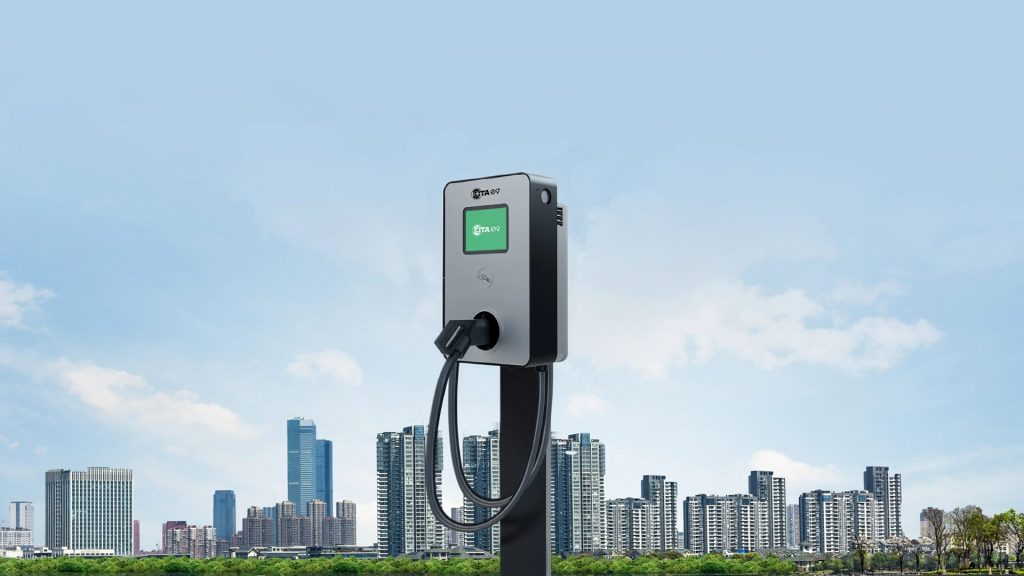
CITA EV Charger supports this approach with AC charging solutions for residential and destination applications alongside high-power DC EV chargers for commercial, fleet and public charging.
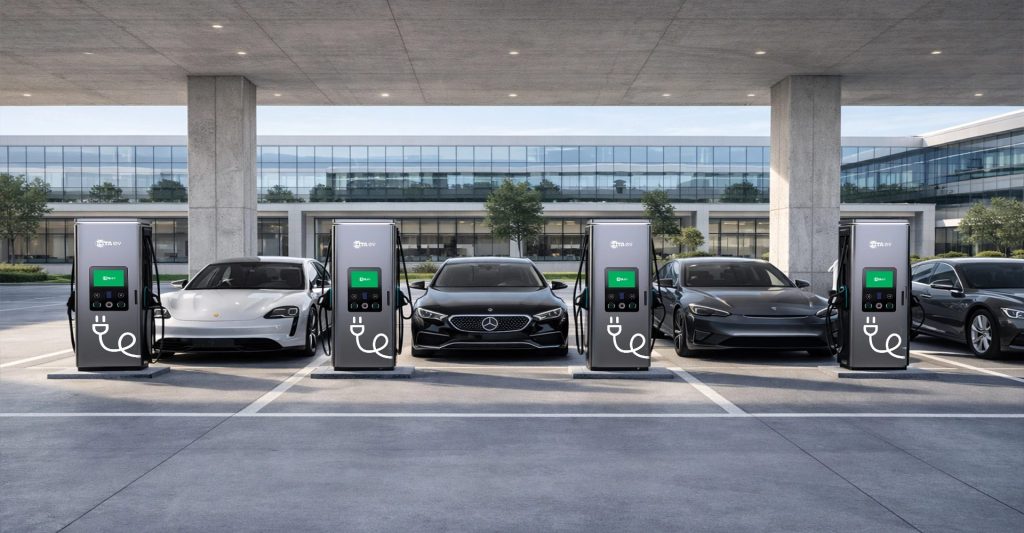
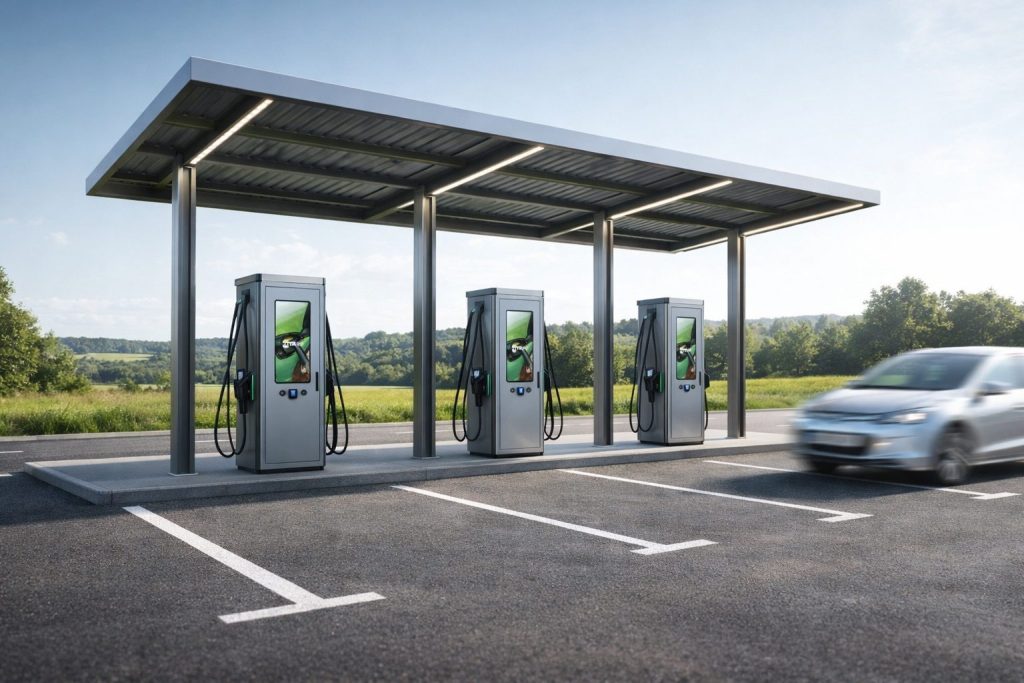
For higher-demand applications, the CITA Smart DC Pro is currently available from 200kW to 480kW, with multiple power configurations designed for different site requirements.
The important principle remains the same: charger capacity should be selected according to the EVs being served, expected utilisation, available site power and operational charging window – not simply the highest charger rating available.
So, Does Daily DC Fast Charging Damage Your EV Battery?

Daily use of DC Fast Chargers does not automatically mean an EV battery will fail prematurely.
Modern batteries are engineered around sophisticated thermal controls and Battery Management Systems, and real-world research shows that EV batteries generally remain robust over their operating lives. However, current evidence also indicates that frequent high-power DC fast charging can contribute to faster average degradation, particularly when combined with high temperatures and other battery stress factors.
For private drivers, AC charging can remain the practical choice when the vehicle spends several hours parked, with DC charging used when faster turnaround is genuinely needed.
For fleets and commercial operators, the equation is different. Faster charging can increase vehicle availability, charging sessions and productivity—making some additional battery ageing an operational trade-off rather than simply a disadvantage.
Build the Right Charging Strategy with CITA EV Charger
CITA EV Charger provides charging solutions for different usage patterns, from 7kW, 11kW and 22kW smart AC charging to high-power DC charging up to 480kW.
Rather than treating AC and DC charging as competing technologies, the right charging ecosystem uses each where it makes operational sense.
Whether you are planning home charging, workplace infrastructure, fleet charging or a public EV charging site in the UAE, CITA can help identify the charging capacity that matches your vehicles, site power and utilisation requirements.
Need the right EV charging solution for your UAE project?
Contact CITA EV Charger to discuss smart AC and DC charging infrastructure designed around your actual charging needs.
Frequently asked questions
DC Fast Chargers do not automatically damage an EV battery. Modern EVs use Battery Management Systems (BMS) and thermal controls to regulate charging power and battery temperature. However, frequent use of very high-power DC charging may contribute to faster battery degradation over time, particularly in hot conditions.
Yes, most modern EVs can safely use DC fast charging regularly. However, if your vehicle remains parked for several hours, such as overnight at home or during the working day, AC charging may be a more practical option. Always follow your EV manufacturer’s recommended charging guidelines.
Frequent high-power fast charging can contribute to increased battery degradation, but the impact varies depending on battery chemistry, temperature, charging frequency, vehicle age and thermal management. Occasional or strategically planned fast charging is a normal part of EV use.
Yes, DC fast charging can be used in hot climates such as the UAE. Modern EVs typically use active thermal management to control battery temperature during charging. In extreme heat, the vehicle may automatically reduce charging power to protect the battery.
AC charging generally places a lower thermal load on the battery and is well suited to routine home, workplace and overnight charging. DC fast charging is better when rapid turnaround is required, such as during long journeys or for taxis and commercial fleets. A combination of AC and DC charging can provide the best balance between convenience, charging speed and long-term battery management.