Skip to content








As the electric vehicle (EV) industry rapidly evolves, one term that frequently surfaces in discussions around smart charging infrastructure is OCPP – the Open Charge Point Protocol. But what exactly is OCPP, and why does it matter for EV charging?
In a world where interoperability and scalability are critical for seamless EV adoption, OCPP acts as the universal language between EV chargers and backend management systems. It ensures that different brands and systems can communicate with each other, offering flexibility, future-proofing, and cost efficiency.
In this blog, we’ll break down what OCPP is, how it works, and why choosing OCPP-compliant chargers is essential for EV drivers, businesses, and infrastructure providers alike.
What is OCPP? (Open Charge Point Protocol)

OCPP, short for Open Charge Point Protocol, is an open-source communication standard that allows electric vehicle (EV) charging stations and central management systems (also known as backends or networks) to communicate with each other seamlessly—regardless of the manufacturer.
Developed by the Open Charge Alliance (OCA), OCPP ensures interoperability between different hardware and software systems. In simple terms, it allows an EV charger made by one brand to work smoothly with a management platform built by another—eliminating vendor lock-in and offering more freedom of choice.
The protocol supports a wide range of functions such as remote monitoring, diagnostics, firmware updates, transaction management, load balancing, and more. Currently, the most commonly used versions are OCPP versions include 1.6 (released 2015), 2.0.1 (2020; IEC standardized in 2024), and 2.1 (2025, with support for V2G and DER) which offers features like enhanced security, smart charging, and improved device management.
Why OCPP Matters for EV Charging and How does it work?

As the EV charging industry grows, the need for seamless communication between EV chargers and backend systems is more critical than ever. This is where OCPP (Open Charge Point Protocol) plays a key role.
1) Interoperability Across Brands
OCPP breaks down compatibility barriers. It allows EV chargers from one manufacturer to work with management software from another. This ensures flexibility in choosing or upgrading your hardware and software—without being locked into a single provider.
2) Scalability for Growth

As your EV charging needs grow, OCPP makes it easy to scale. Whether you’re adding a few chargers to a building or expanding across cities, OCPP simplifies integration, making expansion fast and cost-effective.
3) Smart Charging Capabilities
OCPP enables advanced features such as load balancing, smart energy management, and scheduled charging. These features optimize electricity usage, reduce costs, and enhance user experience.
4) Remote Management and Monitoring
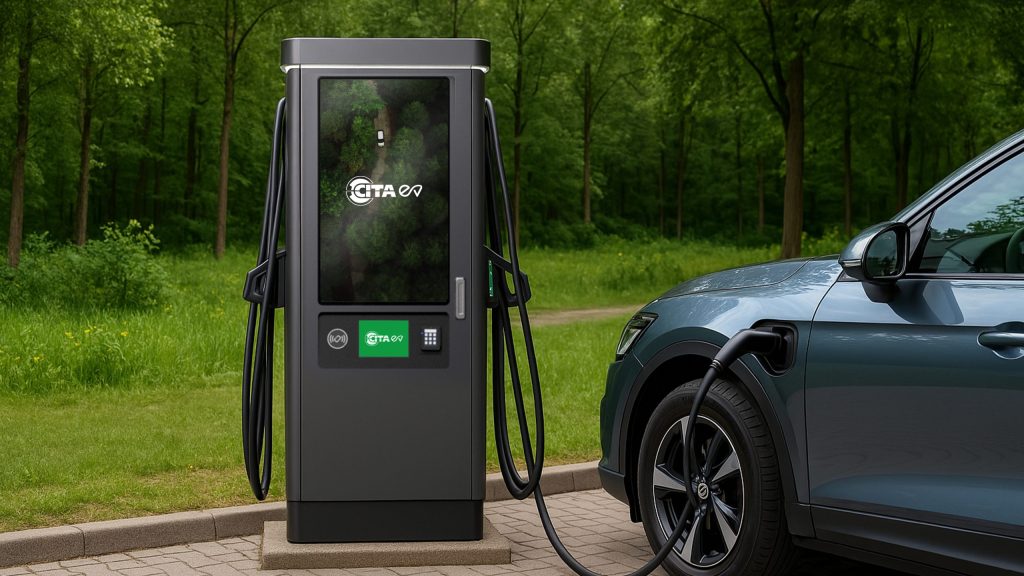
With OCPP, operators can monitor performance, receive alerts, and perform remote diagnostics or firmware updates. This ensures minimum downtime and reduces the need for physical site visits.
5) Future-Proof Technology
The latest versions of OCPP (like 2.0.1) support cutting-edge features such as Plug & Charge, Vehicle-to-Grid (V2G), and integration with renewable energy sources—ensuring your infrastructure is ready for tomorrow.
How Does OCPP Work?
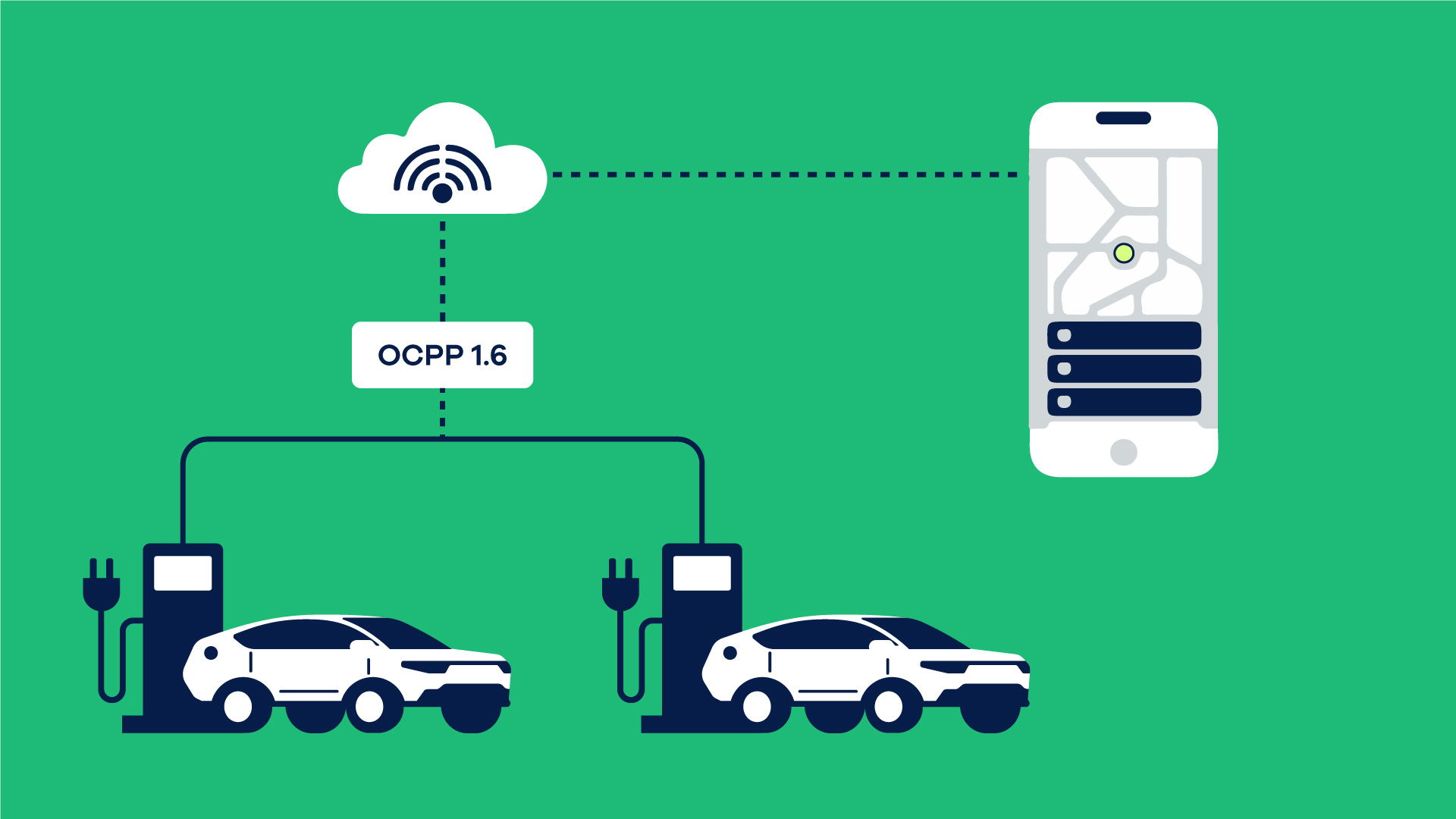
OCPP functions as a communication protocol—a digital language that allows EV chargers (hardware) and central management systems (software) to exchange data.
Here’s a simplified breakdown:
- Charger connects to the central system:
Once installed, the OCPP-compliant EV charger connects via internet (Ethernet, Wi-Fi, or cellular) to the central back-office system. - Two-way communication begins:
The charger sends data such as charging session start/stop, energy usage, status updates, error messages, and availability. - The central system responds:
The backend system can authorize users, set charging limits, initiate remote commands, perform diagnostics, or update firmware—all remotely. - Real-time monitoring:
Operators can view performance dashboards, manage users, track billing, and analyze usage through the software connected via OCPP.
The Evolution of OCPP: Communication Protocols in EV Charging
As electric vehicle (EV) adoption accelerates worldwide, the need for universal, scalable communication between charging hardware and software systems has become essential. That’s where OCPP (Open Charge Point Protocol) has evolved as the global standard. Let’s take a look at how this protocol has advanced through the years to meet the growing demands of EV infrastructure.
OCPP 1.2 and 1.5 – The Early Days
Introduced in the early 2010s, OCPP 1.2 and 1.5 laid the groundwork for open communication between EV chargers and central systems. These versions enabled basic message exchange like session start/stop, error codes, and status updates. While limited in features, they were revolutionary in moving the industry away from closed, proprietary systems.
OCPP 1.6 – The Industry Standard
Released in 2015, OCPP 1.6 became the most widely adopted version to date. It introduced key features such as:
- Smart charging profiles
- Firmware management
- Remote start/stop
- SOAP & JSON over WebSockets
This version enabled far better control, monitoring, and third-party integration, making it ideal for commercial deployments.
OCPP 2.0 and 2.0.1 – A Smarter, Safer Future
OCPP 2.0, launched in 2018 and improved with 2.0.1 in 2020, introduced major upgrades in functionality, security, and flexibility:
- Enhanced security protocols
- Support for ISO 15118 Plug & Charge
- Support for Smart Charging & V2G (Vehicle-to-Grid)
- Improved device and user management
- Better support for DC charging stations and energy metering
OCPP 2.0.1 is now considered the gold standard for future-proof EV charging networks, and has been adopted as an international IEC standard.
Ready to Future-Proof Your EV Charging Network?
Choose CITA EV Chargers – Fully OCPP-Compliant for Seamless Integration, Smart Management & Maximum Flexibility.
Whether you’re scaling your business or upgrading your property, CITA’s OCPP-enabled chargers ensure full compatibility with any backend system, remote control, and smart charging features that keep you ahead of the curve.
Get in Touch Today and power up with CITA — the smarter, open-standard choice for EV charging.