Skip to content







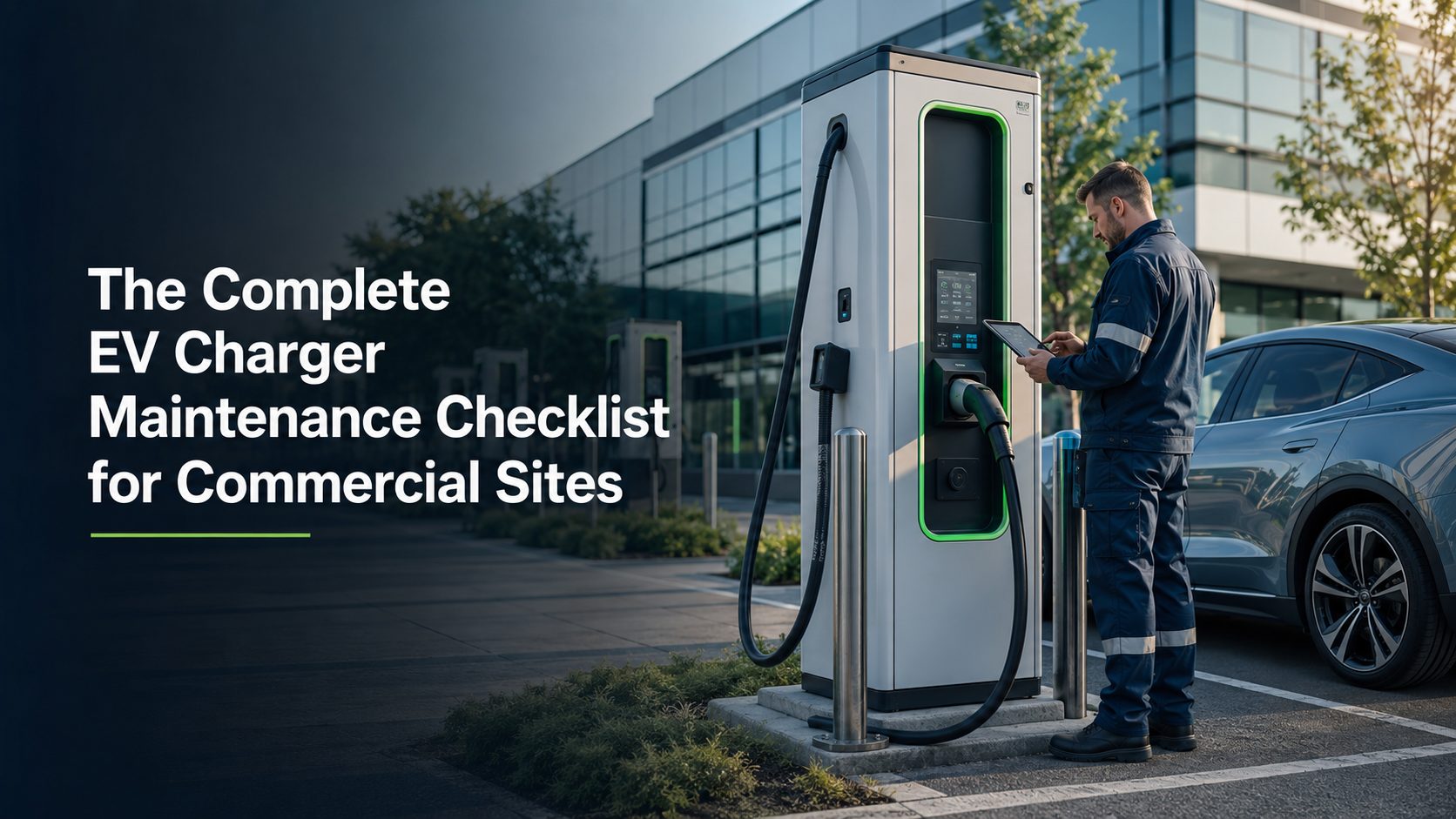
An EV Charger Maintenance Checklist is essential for commercial sites where charger availability directly affects customers, fleet operations and overall site performance. As EV infrastructure expands across the UAE, maintaining installed chargers is becoming just as important as deploying new ones.
In Dubai alone, the EV Green Charger network had expanded to more than 1,860 charging points by January 2026, including infrastructure licensed by DEWA and operated with public and private-sector partners. With more charging points serving a growing number of vehicles, commercial operators need structured maintenance processes that help identify faults early, protect equipment and keep charging stations available when drivers need them.
Why Commercial EV Chargers Need a Structured Maintenance Routine
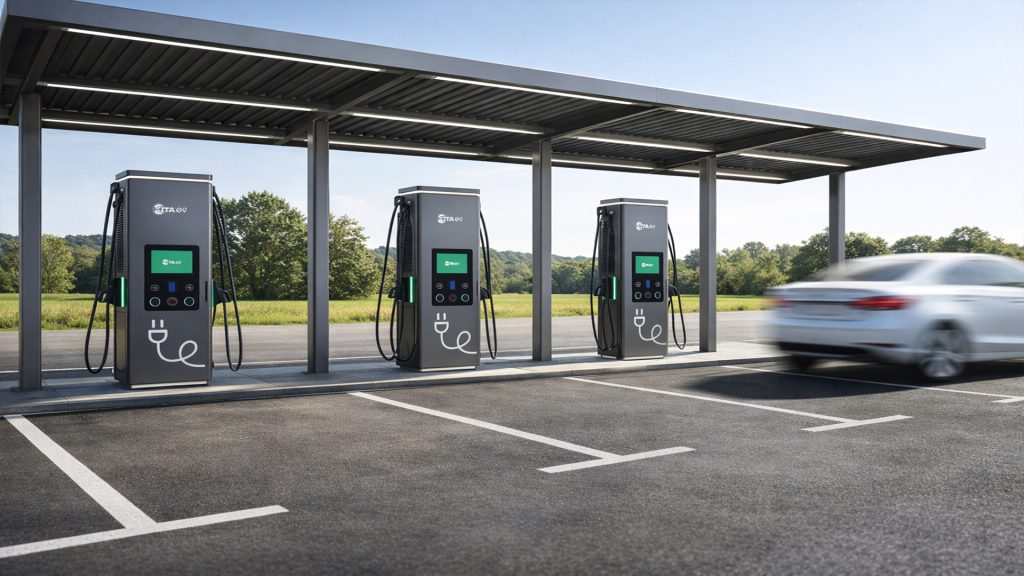
Commercial charging equipment can operate for long hours and is regularly exposed to repeated connector handling, changing weather conditions, dust, heat and high vehicle turnover. DC fast chargers can face additional thermal and electrical loads because of their higher operating power.
Maintenance should therefore be proactive rather than limited to responding when a charger stops working.
A structured EV Charger Maintenance Checklist helps site owners and Charge Point Operators (CPOs) assess hardware, electrical components, connectivity and software systematically.
The following ten checks provide a practical framework for maintaining commercial charging infrastructure.
1) Inspect the Charger Enclosure and Exterior
Begin with a visual inspection of the charging unit.
Look for cracks, dents, loose panels, corrosion, water ingress, damaged seals or signs of impact. Outdoor chargers should receive particular attention because exposure to heat, dust and other environmental conditions can gradually affect components.
Cooling vents and air pathways should also remain clear of dust, debris or obstructions.
A visual inspection may appear basic, but it can reveal developing issues before they affect charger operation. Any physical damage that could compromise electrical safety or environmental protection should be investigated promptly by qualified personnel.
2) Check Charging Cables and Connectors
Cables and connectors are among the most frequently handled components of commercial EV chargers, making them particularly vulnerable to wear.
Inspect charging cables for cuts, abrasion, exposed insulation, excessive twisting or deformation. Connector heads should be checked for cracks, damaged pins, contamination and signs of overheating.
Cable-management systems should also operate correctly so that cables do not remain on the ground where they can be driven over or create trip hazards.
For high-utilisation locations, cable and connector inspections may need to be performed more frequently than other maintenance activities.
3) Test Charging Performance Regularly
A charger can appear online without necessarily delivering a smooth charging experience.
Conduct periodic charging tests using a compatible EV or appropriate diagnostic equipment. Confirm that the charger initiates a session correctly, communicates with the vehicle and delivers power without unexpected interruption.
Operators should also investigate significant differences between expected and actual charging performance.
However, remember that charging power naturally varies according to the vehicle’s maximum charging capability, battery temperature and state of charge. A lower charging rate does not automatically indicate a charger fault.
4) Monitor Electrical Connections and Components
Electrical inspections are an important part of EV charging station maintenance, particularly for higher-power commercial and DC charging equipment.
Qualified technicians should periodically inspect electrical connections, protective devices, terminals, earthing arrangements and other relevant components according to manufacturer recommendations and local requirements.
Loose connections or abnormal heating can reduce performance and potentially create safety concerns if left unresolved.
Maintenance schedules should therefore include appropriate electrical testing rather than relying exclusively on visual inspection of the charger’s exterior.
5) Keep Cooling and Ventilation Systems Clear
Thermal management is particularly important for DC fast charger maintenance.
High-power charging equipment generates heat during power conversion, and cooling systems help maintain components within their intended operating range. Dust accumulation, blocked ventilation paths or degraded cooling components can make thermal management less effective.
Commercial sites in the UAE should pay particular attention to this area because equipment can operate under high ambient temperatures.
Check fans, filters, vents and cooling pathways according to the manufacturer’s maintenance instructions. Filters should be cleaned or replaced when necessary, while recurring overheating warnings should be investigated rather than repeatedly reset.
6) Verify Network and Backend Connectivity
Modern chargers depend on communication almost as much as electrical hardware.
Check that chargers remain connected to the relevant Charge Point Management System (CPMS) and are accurately reporting status, charging sessions, faults and availability.
DEWA, for example, states that its EV Green Chargers are intelligently connected through a CPMS, allowing charger status and location information to be made available digitally.
For commercial operators, connectivity problems can affect remote monitoring, payments, user authentication and reporting even when the charger’s electrical components remain operational.
Regularly reviewing communication logs can help identify intermittent network issues before they become persistent service problems.
7) Review Software and Firmware Updates
EV charging equipment continues to evolve after installation through firmware and backend software.
Operators should periodically check whether manufacturer-approved updates are available and understand what each update addresses before deployment.
Updates may improve functionality, resolve known issues, strengthen security or enhance interoperability with management platforms.
Where a large charging network is involved, updates should be planned and tested carefully to minimise disruption. Operators should also maintain records of firmware versions across their charging assets so that inconsistent configurations can be identified quickly.
Software maintenance should therefore be treated as part of the overall EV Charger Maintenance Checklist, not as a separate IT responsibility.
8) Test Payment and User-Access Systems
For public and commercial chargers, successful power delivery is only one part of the user experience.
Payment terminals, RFID readers, QR-code access, mobile-app authentication and other supported methods should be tested regularly. A technically functional charger can still become unusable if customers cannot initiate or pay for a charging session.
Inspect card readers and displays for physical damage and confirm that payment or authentication processes communicate correctly with backend systems.
Commercial CPOs should also review failed transactions and user complaints. Repeated authentication or payment problems at a particular charger can indicate an issue that routine hardware inspections may not reveal.
9) Review Error Logs and Remote Diagnostics
Waiting for a charger to fail completely is rarely an efficient maintenance strategy.
Modern connected chargers can generate fault codes, warnings and performance data that provide early indications of developing issues. Operators should review this information regularly through their management platform.
Look for recurring communication losses, temperature warnings, unsuccessful sessions, connector faults or unusual changes in charger utilisation.
Remote diagnostics can also help maintenance teams determine whether a problem can be resolved through a remote reset or software intervention before dispatching a technician.
This approach can support higher charger uptime while reducing unnecessary site visits and maintenance costs.
10) Maintain a Preventive Maintenance Record
Every commercial charging site should maintain a documented maintenance history.
Records can include inspection dates, reported faults, component replacements, firmware updates, cleaning activities, technician visits and corrective actions.
Rather than applying the same maintenance interval to every component, operators should build schedules around charger type, manufacturer recommendations, site conditions and utilisation.
A heavily used DC charger at a public charging hub may require more frequent attention than an AC charger at a low-utilisation workplace.
Tracking maintenance history also makes it easier to identify recurring faults and evaluate whether a particular component or charger requires further investigation.
Keep Commercial EV Charging Ready for Every Session
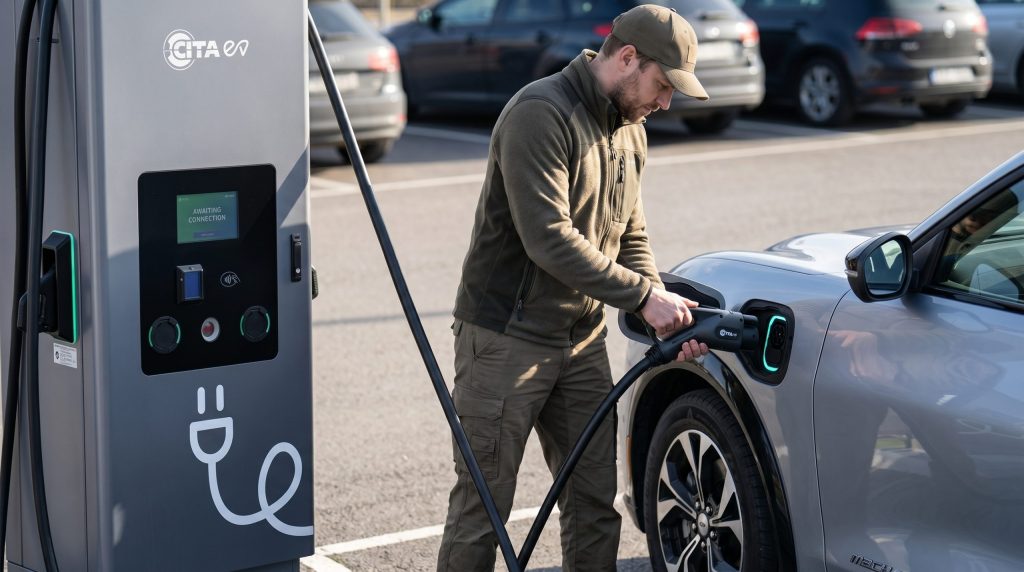
Installing charging infrastructure is only the beginning. In the UAE, long-term performance depends on consistent monitoring, preventive maintenance and timely support. A structured EV Charger Maintenance Checklist helps businesses maintain charger reliability, minimise downtime and deliver a dependable charging experience.
CITA EV Charger provides AC, DC fast and high-power charging solutions for UAE commercial properties, fleets, public charging networks and Charge Point Operators, supported by smart charger management capabilities. CITA EV supports scalable infrastructure designed for diverse charging applications.
Planning or expanding your EV charging network in the UAE?
Connect with CITA EV Charger to discuss your requirements and partnership opportunities.