Skip to content







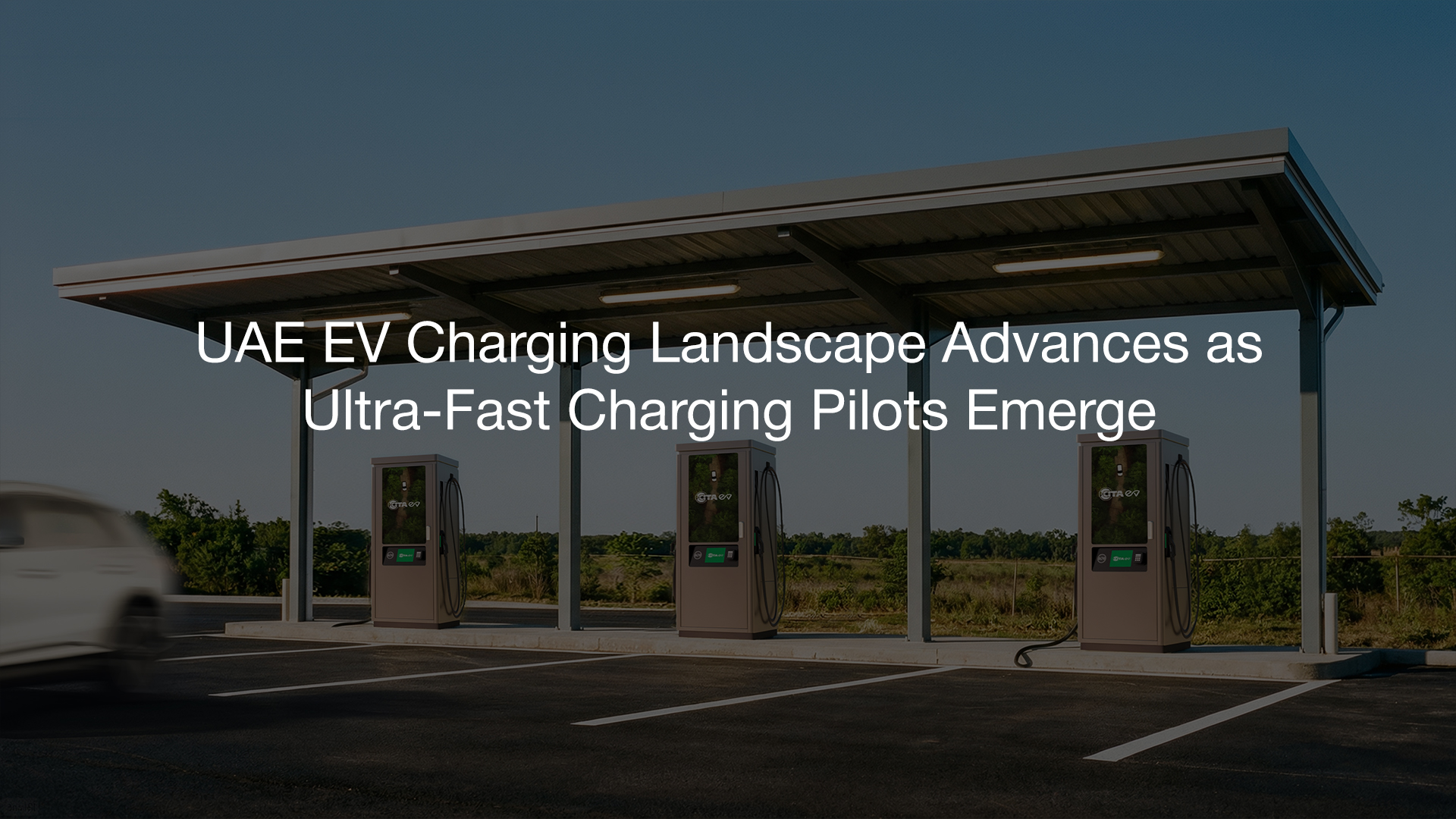
The UAE’s electric vehicle (EV) ecosystem is entering a new stage of development as ultra-fast charging technologies begin to appear in pilot form across the region. Recent demonstrations of high-power EV charging systems in Dubai have highlighted how charging speeds could significantly improve over the coming years, supporting the country’s wider clean mobility and Net Zero 2050 ambitions.
Industry attention has recently turned toward megawatt-level DC charging, a next-generation technology designed to deliver substantial driving range in a matter of minutes under controlled conditions. One such demonstration, led by BYD, showcased the potential of ultra-high-power chargers capable of dramatically reducing charging time when paired with compatible vehicles and infrastructure.
According to publicly shared information, pilot projects for these ultra-fast charging systems are expected to continue through 2025, with broader regional deployment under evaluation toward 2026. While the technology represents a notable milestone, experts stress that real-world implementation will depend on several factors, including grid capacity, thermal management, vehicle compatibility, and regulatory approval.
Infrastructure and Regulation Remain Key Enablers
Beyond charging hardware, infrastructure readiness remains central to the UAE’s EV progress. Authorities have continued to strengthen frameworks that allow EV charging networks to expand safely and efficiently. Dubai Electricity and Water Authority (DEWA) has steadily expanded its EV Green Charger initiative while introducing regulations that enable private charge point operators to participate in network growth.
In parallel, organisations such as ADQCC and TAQA play a role in ensuring quality standards, grid integration, and long-term energy planning as EV adoption accelerates across residential, commercial, and fleet sectors.
What This Means for EV Users
For EV drivers and fleet operators, ultra-fast charging promises greater convenience, particularly for high-utilisation routes and long-distance travel. However, analysts consistently point out that these systems will complement – not replace – existing charging solutions.
Smart AC chargers for homes and workplaces, along with conventional DC fast chargers for public and commercial locations, remain essential to support everyday charging behaviour and grid stability.
CITA EV Perspective
As charging technologies evolve, CITA EV Charger continues to focus on delivering reliable, standards-compliant AC and DC charging solutions designed for today’s infrastructure while remaining adaptable to future advancements. CITA EV chargers support smart energy management, scalable deployment, and regulatory alignment – key requirements in the UAE’s rapidly advancing EV ecosystem.
Discover how CITA EV Charging Solutions supports sustainable mobility today while preparing for tomorrow’s innovations.
Contact our team to learn more about smart EV charging for homes, businesses, and fleets.