Skip to content







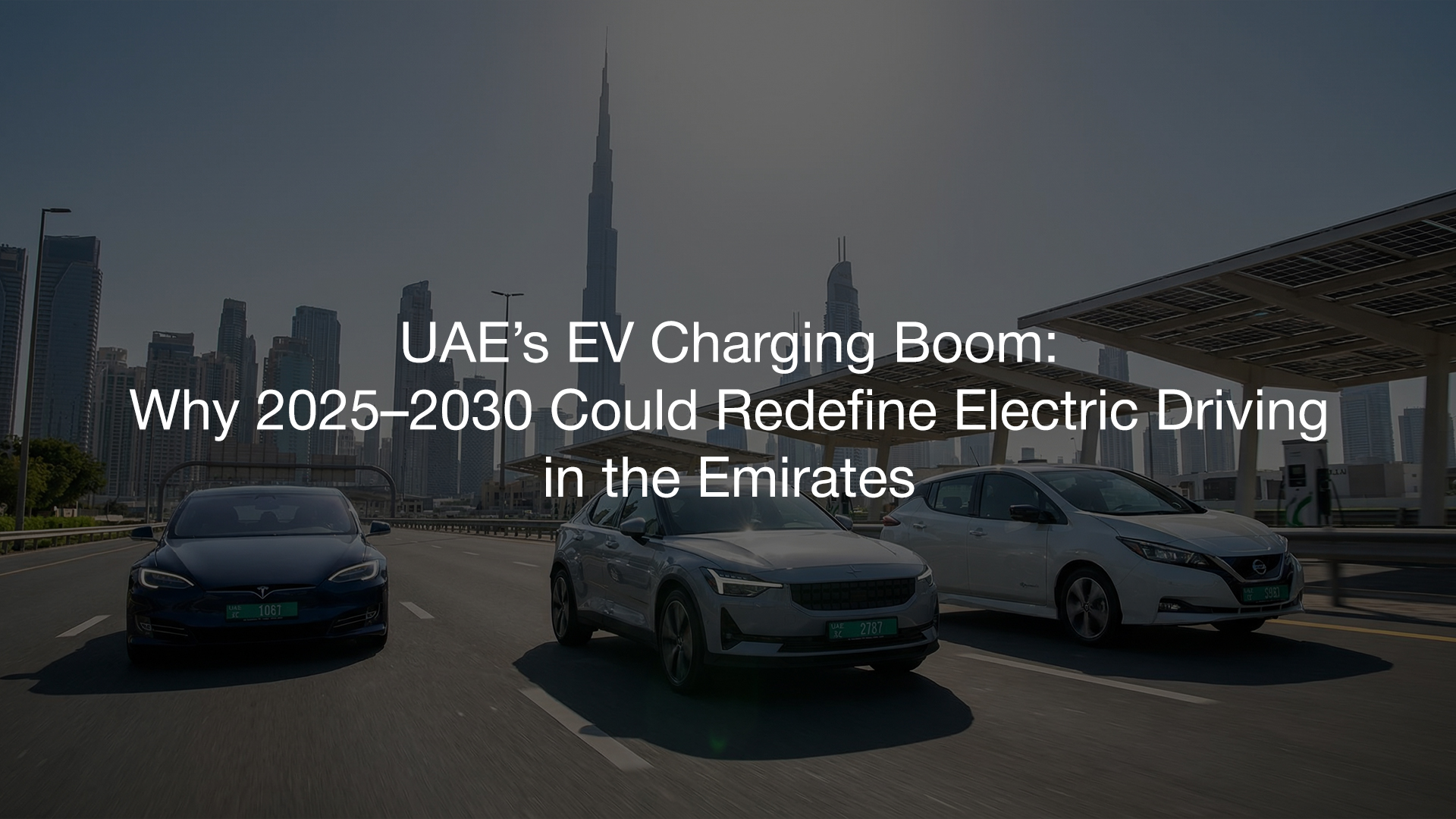
The UAE’s EV Charging Boom is entering a decisive new phase. What was once a slow, pilot-driven transition is rapidly becoming a full-scale infrastructure movement – driven by government policy, energy giants, and consumer-friendly incentives. From Abu Dhabi’s mega charging ambitions to Dubai’s expanding EV regulations, the country is quietly laying the groundwork for one of the most advanced EV charging ecosystems in the region.
At the heart of this transformation is Abu Dhabi’s growing focus on large-scale, future-ready charging infrastructure.
Abu Dhabi’s Mega EV Charging Vision Takes Shape
Abu Dhabi has emerged as a frontrunner in EV charging development through a strategic partnership between ADNOC Distribution and TAQA, under their EV infrastructure platform, E2GO. Industry projections linked to this initiative suggest that up to 70,000 EV charging points may be required across Abu Dhabi by 2030 to support the emirate’s electrification goals.
The rollout is expected to begin with several hundred charging points deployed across highways, residential communities, fleet hubs, and commercial districts, creating a balanced network that supports both daily urban charging and long-distance EV travel. While the 70,000-charger figure represents a long-term demand estimate rather than a fixed installation promise, it signals the sheer scale Abu Dhabi is planning for.
This expansion is closely aligned with Abu Dhabi’s clean energy roadmap, where EVs are expected to account for up to 10% of vehicles on the road by the end of the decade, supported by public-private collaboration and green financing initiatives.
New Rules, Clearer Tariffs, and Better Support for EV Owners
One of the most important recent developments for EV drivers in the UAE is regulatory clarity. Authorities have moved to standardize EV charging tariffs and streamline approvals for home and commercial chargers – a major step in reducing uncertainty for EV owners and property developers.
For drivers, this means:
- More predictable public charging costs
- Faster approvals for residential EV chargers
- Clearer technical and safety compliance requirements
This regulatory maturity is encouraging both homeowners and businesses to invest confidently in EV charging infrastructure, rather than waiting for policy certainty.
Dubai’s EV Charging Network Keeps Expanding
While Abu Dhabi focuses on scale, Dubai continues to lead in operational maturity. Dubai Electricity and Water Authority has expanded its EV Green Charger initiative, improving access to public charging across malls, business districts, residential zones, and transit corridors.
Dubai’s licensing framework now enables private operators to deploy and manage chargers, accelerating growth beyond public funding. Combined with EV-friendly urban planning, the city remains one of the region’s most practical markets for daily EV use.
Why This Matters Now
What sets this phase apart is ecosystem readiness. Infrastructure rollout, regulation, energy planning, and driver incentives are now moving in sync, shifting EV charging from isolated pilots to scalable, future-ready networks.
Industry in Action
As deployment accelerates, providers already active in the UAE are helping translate policy into everyday access.
CITA EV Charger supports Dubai’s EV charging landscape with smart, regulation-ready solutions across residential and commercial locations. With networks expanding rapidly, experienced technology partners will shape the next phase of electric mobility.
Explore how smart EV charging is shaping the future of mobility in the UAE.