Skip to content







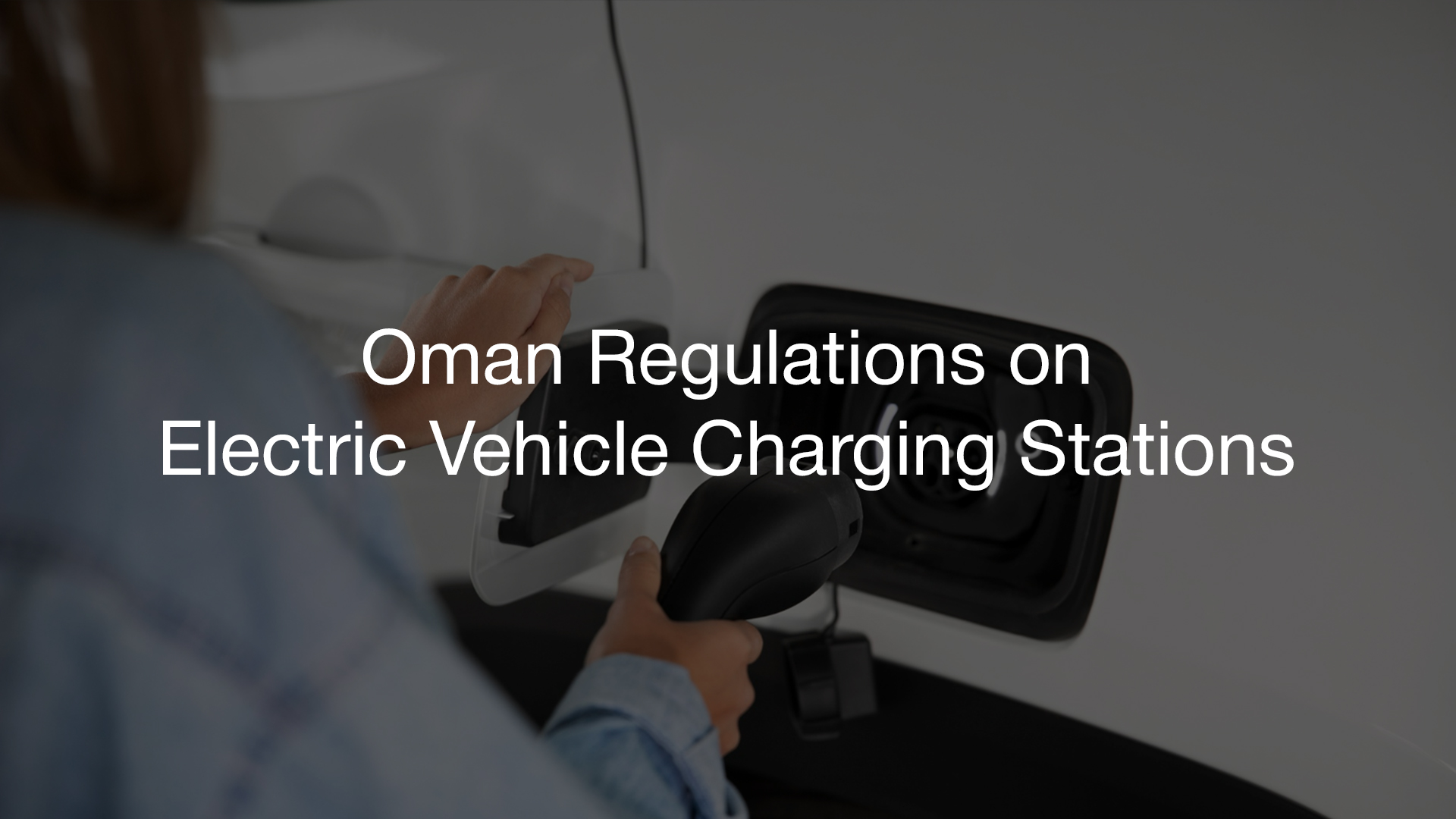
Oman has announced one of the Gulf’s most ambitious frameworks for green mobility with the rollout of the Oman Regulations on Electric Vehicle Charging stations, under Ministerial Decision No. 142/2025. Effective May 4, 2025, the regulations mandate that all new and existing fuel stations must install EV charging facilities, positioning Oman as a regional leader in sustainable transportation.
The framework replaces previous licensing protocols and requires stations to comply by May 2026 or risk fines and potential license cancellation.
Technical Standards and Enforcement Measures
Technical standards are central to the policy. The Public Services Regulatory Authority has prohibited outdated Mode 1 charging, permitting only Mode 3 (dedicated AC) and Mode 4 (DC fast charging) installations. Licensed contractors must carry out all works, backed by grid capacity assessments and prior approval from local distribution companies. Compliance checks and safety inspections are compulsory before any charging station becomes operational. Non-compliance results in a graduated penalty system, beginning with written warnings and escalating to fines of 1,000–3,000 Omani riyals, while repeated or serious violations can lead to license revocation.
These measures echo approaches already seen in the UAE, where robust regulations have accelerated EV adoption and ensured reliable infrastructure. Oman, meanwhile, aims to grow its public charging points from 200 in 2025 to more than 350 by 2027, supported by incentives such as customs tax exemptions, zero VAT on chargers, and free public charging.
CITA EV Charger: Supporting Oman’s Transition
The introduction of the Oman Regulations on Electric Vehicle Charging stations opens significant opportunities for industry leaders to support the country’s green mobility vision. CITA EV Charger is already aligning with these standards by offering certified AC and DC charging solutions, smart grid integration, and solar-compatible systems.
CITA’s product line spans from 7kW and 22kW AC chargers to ultra-fast 60–360kW DC chargers, fully compliant with Oman’s requirement for Mode 3 and Mode 4 technologies. With the backing of the CITA EV App and a Charger Point Management System, operators benefit from real-time monitoring, compliance management, and scalable infrastructure for both urban and highway networks.
As Oman tightens EV infrastructure standards, CITA EV Charger stands ready to deliver future-proof, regulation-compliant solutions – helping fuel stations, businesses, and operators meet sustainability targets while ensuring reliable charging access across the country.
Get a free consultation or request a personalized quote today to see how CITA can support your transition.