Skip to content







What do the new DEWA EV Charging Regulations mean for Charge Point Operators (CPOs) in Dubai? With EV adoption in the UAE accelerating faster than ever – over 25,000 electric cars now registered in the country, and Dubai aiming for 42,000 EVs on its roads by 2030 – the pressure is on to build reliable, scalable, and compliant EV charging networks.
For CPOs, understanding these updated regulations isn’t just about following rules; it’s about ensuring smooth operations, protecting investments, and building customer trust.
The Big Picture: Why DEWA EV Charging Regulations Matter
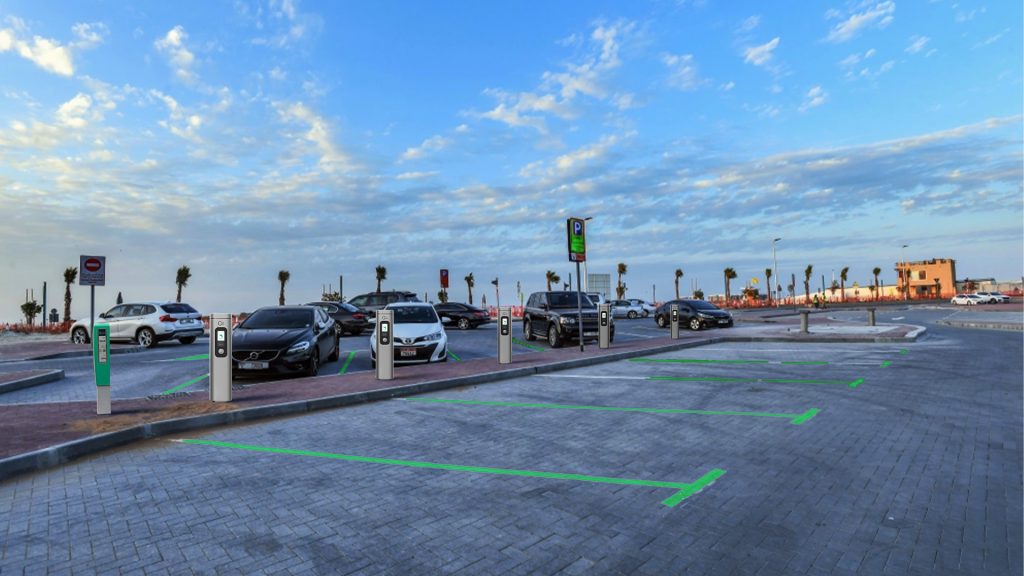
The Dubai Electricity and Water Authority (DEWA) is the central authority responsible for setting standards, approving equipment, and overseeing EV charging operations across the emirate. With the 2025 DEWA EV Charging Regulations, the government aims to:
- Create a level playing field for independent CPOs and DEWA-operated EV chargers.
- Ensure EV drivers get transparent pricing and reliable service.
- Align charging operations with Dubai’s clean energy and sustainability goals.
- Standardize the use of certified EV chargers that meet safety and performance benchmarks.
For commercial EV charger suppliers, residential EV charger suppliers, and workplace EV charger suppliers, this regulatory shift means every installation – whether at a villa, office tower, or highway service hub – must align with DEWA-approved frameworks.
Approval and Licensing Structure
Under the 2025 DEWA EV Charging Regulations, no one can operate public EV charging stations in Dubai without aligning with one of three models:
1.Direct development and operation by DEWA
2.Operation via DEWA subsidiaries
3.Independent operation under a CPO License
For independent operators, the CPO License is mandatory. This ensures every provider of EV charging solutions – whether they supply smart EV chargers, AC EV chargers, or DC EV chargers – is accountable to a single authority.
Licensing conditions vary depending on scale. For example, a small home EV charger supplier looking to expand into semi-public charging for gated communities will face lighter compliance requirements compared to a commercial EV charger supplier rolling out a city-wide fast-charging network.
2025 EV Charging Price Framework for DEWA Regulations

The 2025 DEWA EV Charging Regulations also introduce clear pricing aligned with UAE Cabinet Resolution No. (81) of 2024.
- AC Charging (Public): 0.7 AED/kWh (+VAT)
- DC Fast Charging (Public): 1.2 AED/kWh (+VAT)
These prices include:
- DEWA’s Red Slab Electricity Tariff
- Applicable fuel surcharge
- A capped CPO charging fee
What’s crucial for CPOs: discounting is prohibited. This prevents price wars and ensures all drivers pay consistent, transparent rates regardless of the operator. For businesses, it means more predictable revenue streams when planning investments in electric vehicle chargers.
Technical Compliance Requirements

To qualify as an approved EV charger under DEWA rules, all equipment must meet strict technical and safety standards.
Key points include:
- DEWA Distribution System Only: EV Chargers must connect exclusively to DEWA’s grid. Off-grid renewable or diesel-based charging is prohibited without explicit approval.
- Certified EV Chargers Only: Equipment must meet DEWA’s EV charging technical DEWA EV Charging Regulations, often aligned with international standards like IEC and ISO.
- OCPP & ISO 15118 Compliance: Support for protocols like Plug and Charge ensures interoperability and user convenience.
This means EV charger manufacturers in the UAE must align designs with DEWA’s approved specifications before supplying to CPOs.
Service Conduct Regulations
The DEWA EV Charging Regulations 2025 don’t just focus on pricing and licensing – they also set clear service restrictions to ensure fairness and prevent exploitation of EV users.
1) No subscription-only models
Operators cannot lock customers into subscription plans as the only way to access charging. Pay-as-you-go access must always be available.
This prevents barriers to adoption, especially for occasional EV users or visitors who don’t want long-term commitments.
2) Parking fees cannot be inflated for EV drivers
EV Charging operators or landlords can’t set higher parking rates just because a driver owns an EV.
For example, if parking in a mall costs 10 AED per hour, the same rate must apply to EV drivers, even if charging services are available. This protects drivers from hidden penalties for going electric.
3) Mobile charging services must disclose fees transparently
If an operator provides on-demand charging via mobile units (such as vans equipped with smart EV chargers), they are allowed to charge extra for the convenience.
However, all service charges must be clear upfront – no vague “service add-ons” or hidden costs.
What the New Rules Mean for Charge Point Operators (CPOs)

The DEWA EV Charging Regulations 2025 are more than just technical guidelines – they reshape how Charge Point Operators approach the market. From licensing to pricing and technology, these rules influence how CPOs plan investments, build infrastructure, and serve EV drivers.
Let’s look at the practical takeaways for operators navigating this new environment.
1) Opportunities for New Players
The latest framework removes much of the uncertainty that used to surround the EV charging business in Dubai. By laying out exactly how licenses work, the DEWA EV Charging Regulations give newcomers a clearer roadmap.
Residential EV charger suppliers can test semi-public setups in communities, while commercial EV charger suppliers have room to design scalable operations that fit within the approved system.
2) Financial Outlook and Planning
With tariffs now standardized, operators no longer need to second-guess market rates. This stability allows CPOs to plan earnings with greater accuracy, balancing licensing costs against usage forecasts.
It also guides decisions on where to deploy standard AC EV chargers for steady charging needs versus investing in fast DC EV chargers at high-traffic spots where quick turnaround is critical.
3) Technology and Grid Alignment
To stay compliant, operators must think beyond hardware. All EV chargers are required to connect directly to DEWA’s distribution grid and be compatible with OCPP, ensuring seamless communication and interoperability.
For CPOs, this means robust management platforms and reliable back-end systems are as important as the certified EV chargers themselves.
4) A Better Deal for Drivers
From a user’s standpoint, the new DEWA EV Charging Regulations make charging more consistent and trustworthy. EV owners benefit from:
- Clearly defined and fair pricing structures
- Access to reserved EV parking bays near charging points
- Protection from hidden or inflated service fees
- Dependable charging powered by approved EV chargers across the network
As confidence in the system grows, more people are encouraged to adopt electric vehicles, which in turn drives higher utilization for operators and strengthens the overall EV ecosystem.
Building a Compliant and Competitive Future
The 2025 DEWA EV Charging Regulations are more than just rules – they’re a blueprint for sustainable, trustworthy, and scalable EV infrastructure in Dubai. CPOs that act now – by adopting certified EV chargers, transparent billing systems, and smart charging software – will position themselves as leaders in this rapidly expanding market.
At this point, choosing the right technology partners becomes critical.
Brands like CITA EV Charger, a leading EV charger manufacturer in the UK with proven expertise in AC and DC EV charging solutions, provide the kind of reliability, compliance, and smart integration that today’s regulatory framework demands.
With features like IP-rated designs, 7kW to 360kW charging capacities, and advanced management systems, CITA’s solutions align seamlessly with Dubai’s evolving market needs.
For CPOs, the path forward is clear: embrace compliance, invest wisely, and deliver charging experiences that build trust with every kilowatt-hour.
Ready to future-proof your charging network? Get in touch with CITA EV Charger today for a free consultation and discover the right solution for your business.