Skip to content







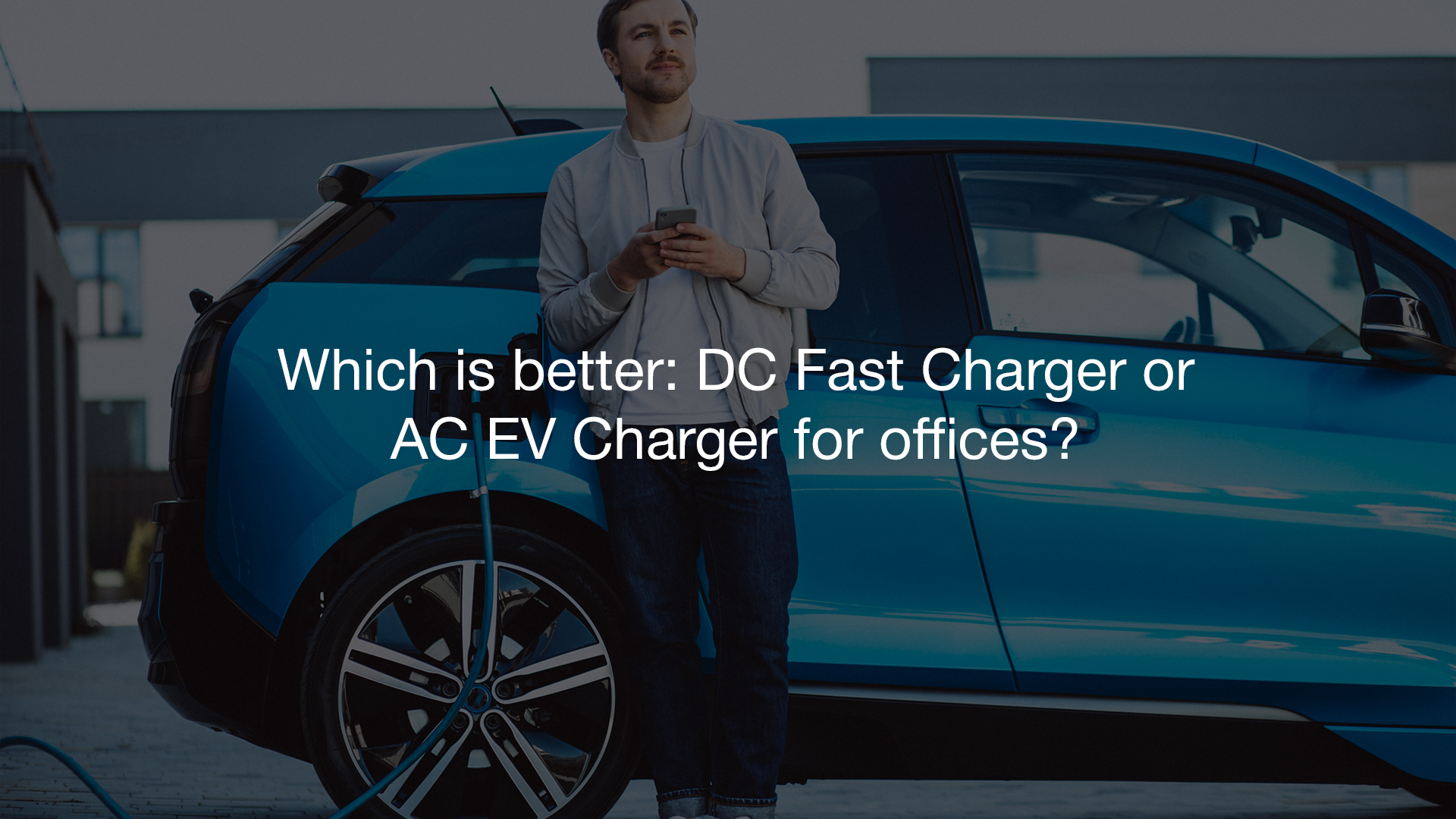
As workplaces across the UAE continue to adopt sustainability-led initiatives, the installation of an EV Charger on office premises has quickly become a key priority. With more electric vehicles entering the UAE market – supported by initiatives like Dubai’s Green Charger Programme and the UAE’s long-term Net Zero 2050 vision – businesses are beginning to evaluate the best type of EV charger for their facilities. According to the UAE government’s targets, the country aims to have over 70,000 public and private EV charging points by 2030, reflecting a strong shift toward workplace and destination charging.
Against this backdrop, companies often face one core question:
“Which is better for offices – an AC EV Charger or a DC EV Charger?”
Both charger types play essential roles in the EV ecosystem, but their purpose, capabilities, cost considerations, and operational suitability differ meaningfully. For offices, choosing the right type of charger is not just a technical decision – it impacts employee experience, operational efficiency, long-term sustainability goals, and workplace infrastructure planning.
Understanding AC and DC EV Chargers for Workplace Environments
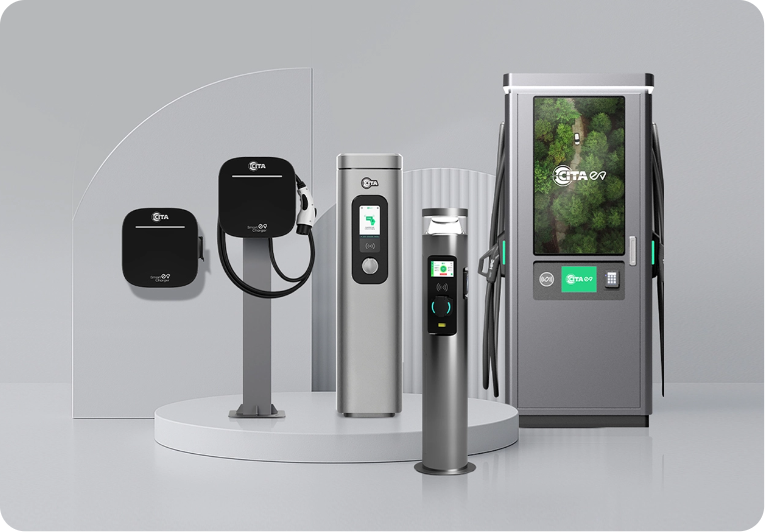
Before selecting an EV charger, it is crucial to understand how AC and DC systems differ in functionality, speed, cost, compatibility, and installation requirements. Both are essential components of modern EV charging solutions, but their applications vary significantly.
What is an AC EV Charger?
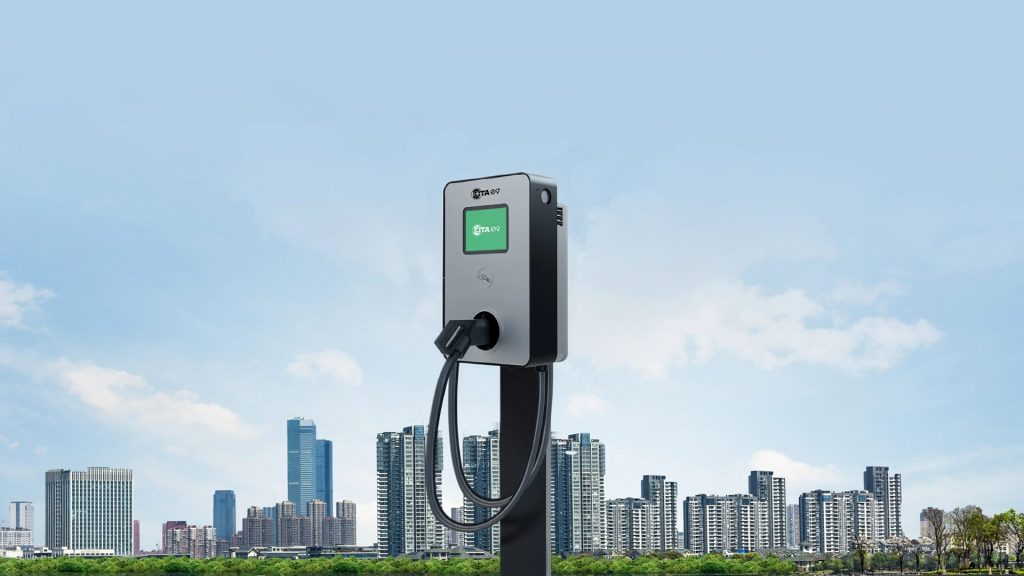
An AC EV Charger provides alternating current to the vehicle, which is then converted into DC power by the EV’s onboard converter. The charging speed depends on the charger’s power rating (most commonly 7 kW or 22 kW) and the capacity of the car’s onboard AC converter. AC charging is the most common, practical, and cost-effective option for workplaces where vehicles are parked for several hours.
Modern commercial AC chargers are often compact in design, durable (IP65 and IK10 rated), and suited for long-term, daily office use. Some models also support dual charging operation (e.g., dual AC chargers), allowing two vehicles to charge simultaneously – ideal for offices with multiple employees driving EVs.
What is a DC EV Charger?
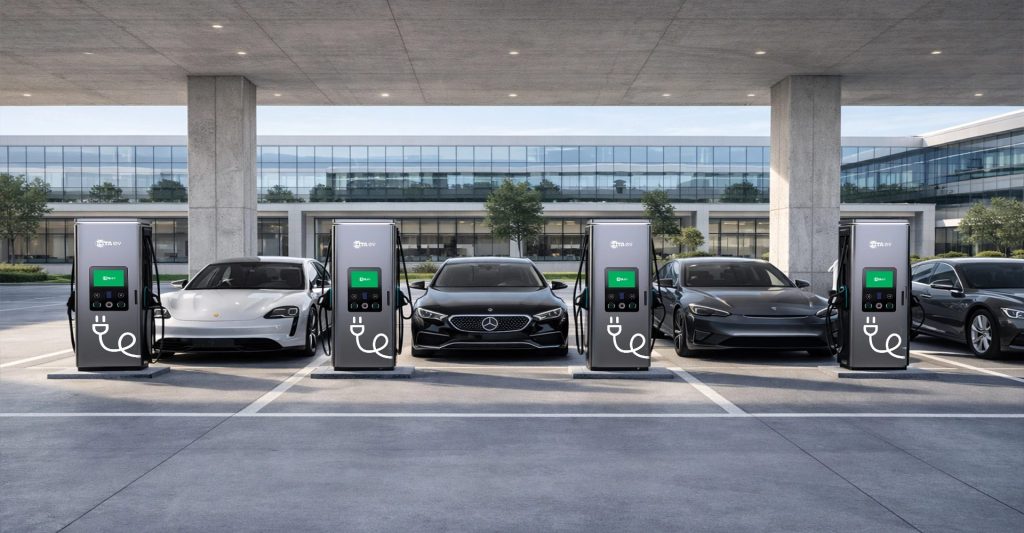
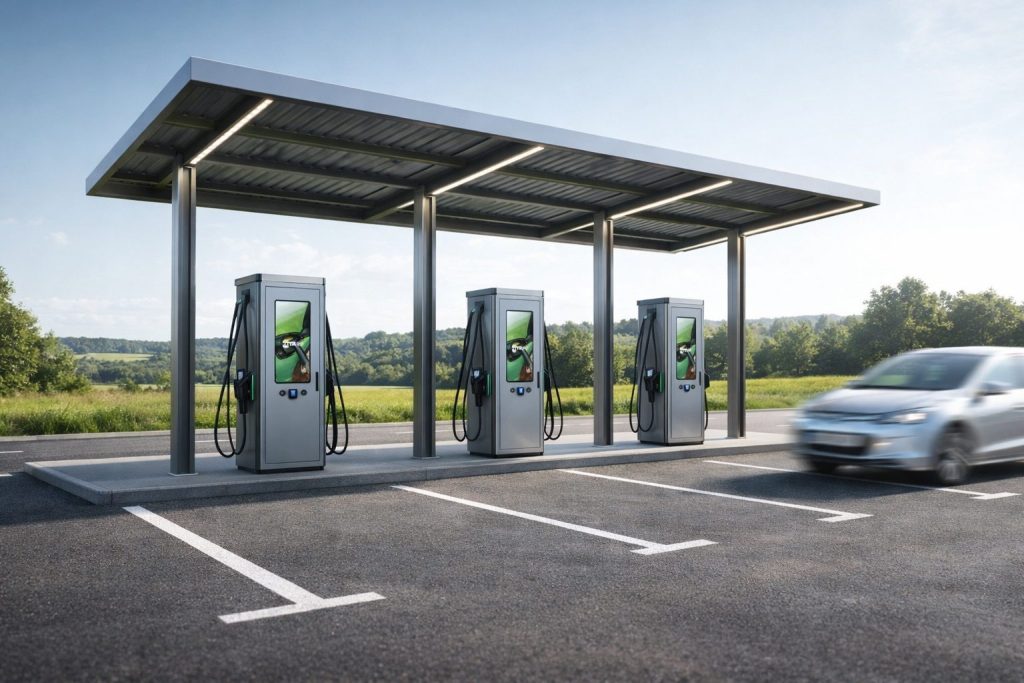
A DC EV Charger supplies direct current directly into the EV’s battery, bypassing the onboard AC converter entirely. Because DC chargers deliver higher power output (ranging from 60kW to 360 kW), they can rapidly charge an EV – sometimes from 20% to 80% in just 15–25 minutes, depending on the vehicle. These chargers are commonly found in public stations, highways, logistics hubs, and high-turnover commercial locations.
DC chargers are built with robust protection standards (IP54, IP55, IK10), advanced cooling systems, and intelligent power modules, making them suitable for heavy-duty environments. Their speed and efficiency make them beneficial for workplaces that require frequent, rapid charging.
Key Differences Between AC and DC Charging for Offices
Before selecting the right charger for an office environment, it’s essential to understand how AC and DC charging differ in terms of speed, infrastructure needs, and overall cost. Each option brings distinct advantages depending on how long employees’ vehicles remain parked and how frequently charging is required.
To help businesses make an informed and efficient choice for workplace charging, here’s a clear table outlining the key differences between AC and DC EV chargers.
| Sr. No. | Key Factor | AC Charger | DC Charger |
|---|---|---|---|
| 1 | Charging Speed | Slow to moderate (3.3–22 kW) | Very fast (60–360 kW+) |
| 2 | Charging Method | AC converted to DC inside the car (uses onboard charger) | AC converted to DC inside the charger itself (bypasses onboard charger) |
| 3 | Ideal Usage | Homes, offices, apartments - daily/overnight charging | Highways, commercial hubs, fleets - rapid top-up charging |
| 4 | Installation Cost | Low to medium | High (needs stronger power infrastructure) |
| 5 | Charger Cost | Affordable, suitable for residential users | Expensive, commercial-grade technology |
| 6 | Power Requirement | Single/three-phase power | High-power grid connection (400–800 V) |
| 7 | Battery Impact | Gentle on battery - recommended for daily use | Faster heat generation - frequent use may reduce long-term battery life |
| 8 | Charging Time | 4–8 hours for full charge | 15–60 minutes depending on battery and kW |
When Should Offices Choose AC EV Chargers?

AC charging remains the preferred solution for most workplaces because it aligns naturally with how employees use their vehicles throughout the day. Since office parking typically involves long dwell times, AC chargers deliver steady, predictable charging without overloading infrastructure or budgets.
They offer reliability, scalability, and strong cost efficiency – making them a practical choice for everyday workplace environments.
1) Ideal for Full-Day Employee Parking
The majority of workplace EVs remain parked for extended periods, often 6–9 hours a day. This makes AC chargers the most suitable option, as they comfortably replenish the battery over a full workday without requiring high-power delivery.
Because the charging session is gradual and controlled, it supports battery longevity and ensures vehicles are ready by the end of the shift. AC chargers also minimize grid strain, making them ideal for offices in dense commercial districts.
2) Cost-Efficient for Office Budgets
Businesses looking for economical, reliable solutions choose AC chargers due to lower installation, maintenance, and energy costs. They provide the best balance between performance and affordability, especially for multi-story buildings and shared office campuses.
AC chargers also benefit from uncomplicated electrical requirements, reducing upgrade expenses and long-term operational commitments. For companies adopting sustainability measures without heavy capital expenditure, AC chargers deliver maximum value.
3) Suitable for Multiple EV Users
Dual AC chargers (such as 44kW AC units) allow businesses to charge two vehicles at once – ideal for offices with mixed staff EV ownership. This helps avoid queues, supports group charging habits, and improves the overall workplace charging experience.
The ability to serve two EVs simultaneously allows offices to scale charging infrastructure as adoption grows. It also helps businesses maintain fairness and accessibility in shared parking environments.
4) Excellent for Visitor and Employee Convenience
Workplaces hosting clients, vendors, and guests benefit from AC chargers in visitor parking zones. They offer a practical, user-friendly charging solution while reinforcing the organization’s sustainability commitment.
AC chargers also help create a positive first impression for business partners, showing that the company is aligned with modern mobility trends. For employees, easy access to AC chargers reduces range anxiety and supports their transition to electric vehicles.
When Are DC Fast Chargers the Right Choice for Offices?
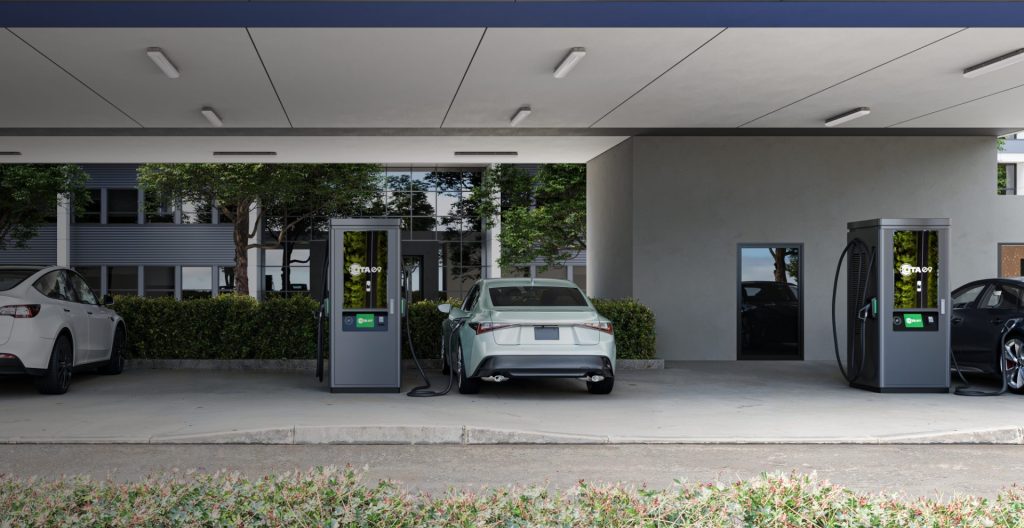
While AC chargers meet most daily workplace charging needs, some office environments require faster, high-power solutions to keep vehicles operational with minimal downtime. In such cases, DC fast chargers offer significant advantages by delivering rapid energy replenishment, supporting busy fleets, and elevating the overall workplace charging experience.
Below are the scenarios where DC fast charging becomes the smarter choice.
1) Ideal for Fast-Turnover Scenarios
Companies operating shuttle services, ride-hailing fleets, or internal logistics vehicles may require fast charging to minimise downtime. A DC EV Charger enables quick top-ups between trips, ensuring vehicles stay in circulation throughout the day.
This is especially useful for offices with constant vehicle activity or tight operational schedules. By reducing idle time, businesses can maintain smoother, more predictable transport operations.
2) Suitable for Corporate Campuses and Large Offices
Large office campuses with dedicated parking areas may invest in high-power DC charging infrastructure. These systems can support large numbers of employees, company fleets, and operational vehicles without creating queues or delays.
Corporate locations that experience high parking turnover or multiple charging demands benefit from the additional speed DC systems provide. This ensures that the infrastructure keeps pace with both current and future EV growth within the organisation.
3) Essential for Fleet Operations
Businesses managing delivery vans, commuter fleets, or company-owned EVs benefit from ultra-fast DC chargers (60–360 kW), ensuring that vehicles are ready for deployment in minimal time. For fleet-heavy workplaces, slow charging can disrupt daily workflow and reduce operational efficiency.
With DC charging, companies can schedule rapid charging intervals, distribute energy intelligently, and maintain a continuous flow of vehicle activity. This is particularly valuable for fleets that operate across long routes or multiple shifts.
4) Advantageous for Premium Visitor Experience
Companies expecting high-value clients or VIP visitors may want to offer fast charging as a premium service. A DC fast charger enhances the overall visitor experience by allowing guests to gain substantial range during short meetings.
It also strengthens the company’s sustainability image and demonstrates forward-thinking infrastructure. For offices that aim to deliver a high-end experience, providing rapid charging can become a subtle yet impactful differentiator.
Which Is Better for Offices - AC or DC Chargers?

Choosing between AC and DC chargers for an office environment depends entirely on how the space is used, how long vehicles stay parked, and what type of charging behaviour the workplace needs to support. Both AC EV Chargers and DC EV Chargers offer distinct advantages, and in many cases, a combination of the two creates the most efficient, future-ready setup.
When AC Chargers Make More Sense
AC chargers are well-suited to workplace environments where vehicles remain parked for several hours. They work best for:
- Offices with long, fixed parking durations
- Employees who charge while working
- Companies seeking cost-efficient charging solutions
- Small and mid-sized businesses with moderate EV usage
- Commercial buildings or shared office spaces
AC charging offers steady, reliable replenishment throughout the day, making it a practical choice for daily commuting patterns and predictable office routines.
When DC Chargers Become the Better Option
DC fast chargers are ideal when vehicles need rapid top-ups or when demand is more dynamic. They are most useful for:
- Large corporate campuses with higher charging demand
- Businesses operating EV fleets or shuttle services
- Fast-turnover environments where downtime must be minimised
- Offices that frequently host visitors or clients
- Locations prioritising high-performance charging capability
DC charging supports quick, high-power energy delivery, making it suitable for operations that cannot rely solely on slower charging cycles.
Finding the Right Balance for Your Workplace
In many offices, AC chargers form the backbone of daily charging, while DC chargers are added strategically for rapid-charging needs. Rather than choosing one over the other, the best approach is to assess the company’s parking behaviour, vehicle usage patterns, and long-term sustainability goals.
A well-designed combination often delivers the most flexible, future-proof EV charging experience.
Choosing the Right EV Charging Strategy for Your Workplace
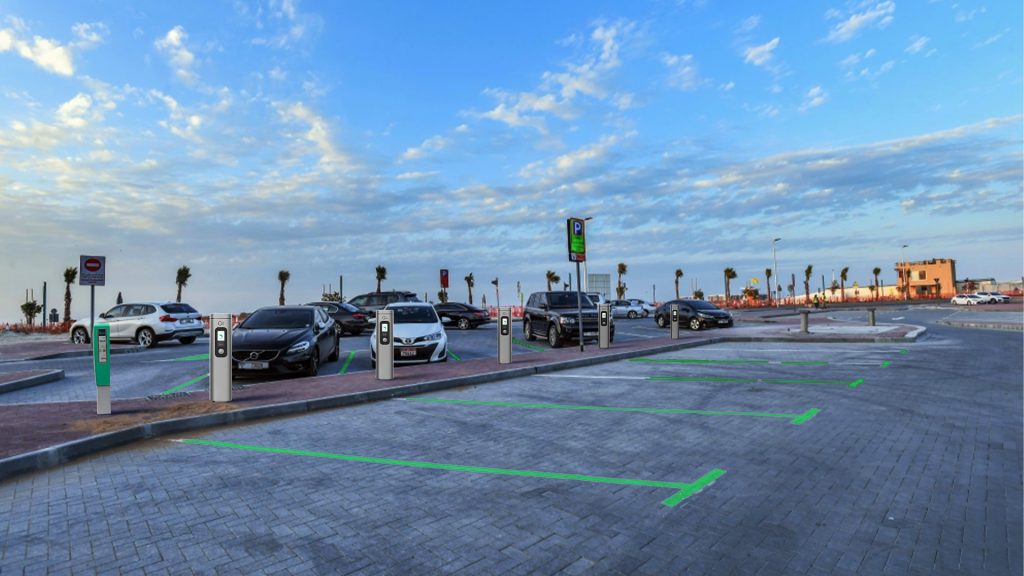
Selecting the right EV Charger for an office is not just about speed – it’s about understanding workplace behaviour, charging patterns, sustainability goals, and long-term investment value. AC chargers usually meet the needs of daily workplace parking, while DC chargers support fast-moving operational needs or specialised corporate environments.
Leading workplace EV charger manufacturers in the UAE provide both AC and DC charging systems engineered for safety, durability, and reliability. Built with strong protection ratings, dual-vehicle charging options, fast-charging capabilities, mobile app control, and centralised management systems, these chargers are already supporting numerous organisations across the UAE.
Ready to Equip Your Office with Reliable EV Charging?
CITA EV Chargers already support many UAE businesses with durable AC and DC charging systems designed for workplace environments.
If your organisation is planning to install workplace EV chargers, you can request a free consultation, site assessment, or product guidance to understand the best solution for your office.