Skip to content






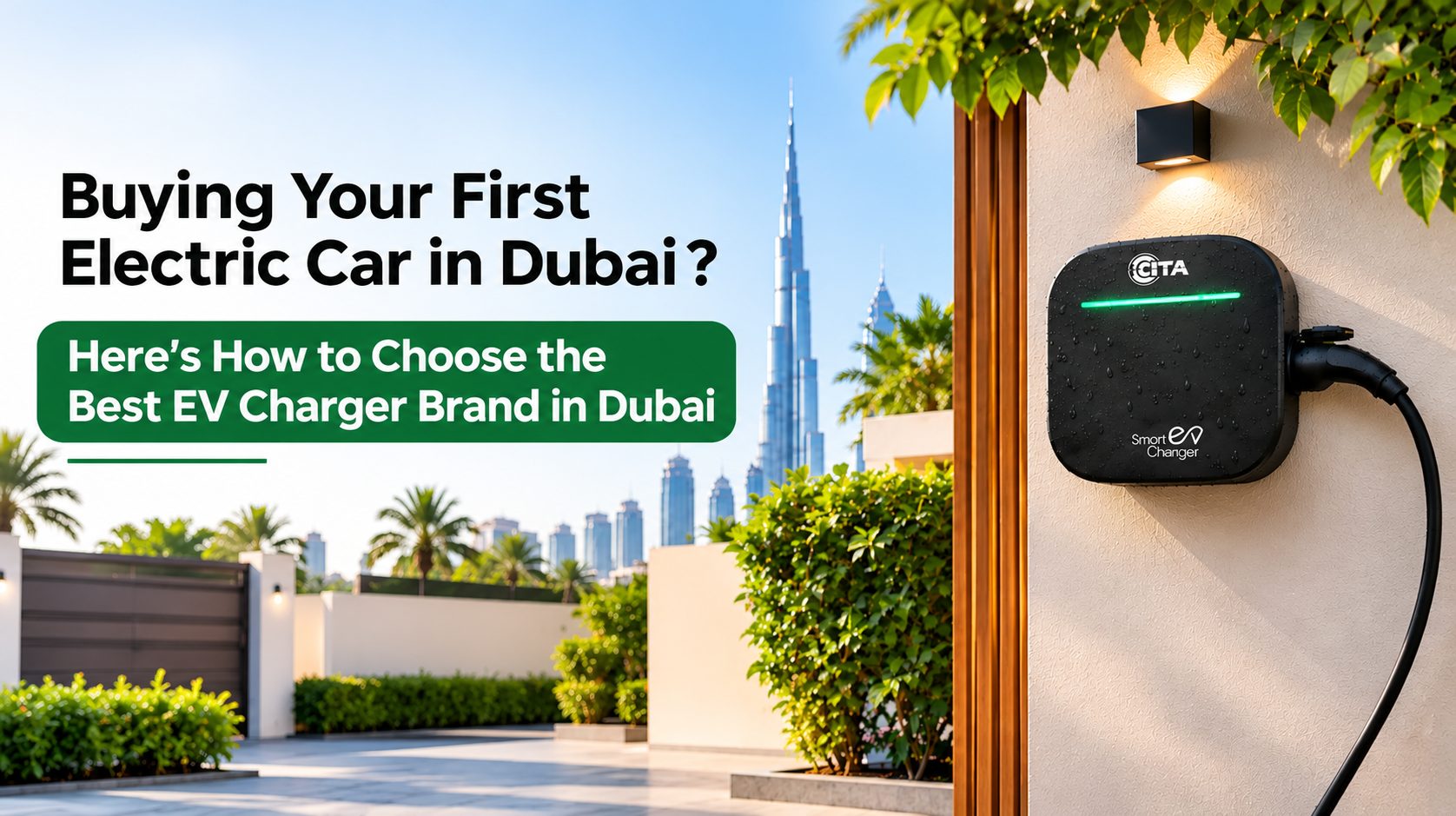
Finding the Best EV Charger Brand in Dubai is an important step when purchasing your first electric car. While choosing an EV often involves comparing battery range, performance and technology, selecting the right charging equipment is equally important for a convenient ownership experience.
Dubai is steadily expanding its electric mobility ecosystem through initiatives such as the Dubai Electricity and Water Authority’s (DEWA) Green Charger programme. The growing charging network is making electric vehicle ownership more accessible, but many first-time buyers still prefer the convenience of charging their vehicles at home.
However, not every EV charger offers the same charging speed, compatibility, safety features or smart functionality. Some are designed for residential use, while others are better suited to workplaces and public charging stations.
Why Does Choosing the Right EV Charger Brand Matter?
Buying an electric vehicle changes how you think about refuelling. Instead of visiting a petrol station, you can recharge your vehicle while it is parked at home, at work or at a public charging location.
A suitable charger can make this routine more convenient by providing predictable charging sessions and useful energy management features.
Choosing the Best EV Charger Brand in Dubai involves more than selecting the charger with the highest advertised power output.
A well-matched charging system should offer compatibility with your vehicle, appropriate electrical protection, straightforward operation and dependable technical support.
For first-time buyers, understanding these factors can prevent unnecessary installation expenses and help avoid purchasing equipment that does not match the vehicle’s capabilities.
8 Important Factors to Consider When Choosing an EV Charger Brand in Dubai

Before purchasing an electric car charger in the UAE, evaluate the following features to identify a suitable charging solution.
1. Check Compatibility with Your Electric Car
Not every electric vehicle uses the same charging connector or accepts the same charging power.
Most modern EVs sold for the European and UAE markets use a Type 2 connector for AC charging, while many use CCS2 for DC fast charging. However, connector standards can vary depending on the vehicle’s origin and model.
Before purchasing a Type 2 EV charger, confirm your vehicle’s connector, onboard AC charging capacity and manufacturer recommendations.
For example, an EV with an 11 kW onboard AC charger cannot charge at 22 kW simply because it is connected to a 22 kW AC charging station.
2. Understand Different EV Charging Speeds
Charging power directly affects how long your vehicle needs to remain connected.
For residential charging, common options include 7 kW, 11 kW and 22 kW AC chargers.
| Charger capacity | Typical application | Theoretical time to add 40 kWh |
|---|---|---|
| 7 kW AC | Villas and home parking | 6-7 hours |
| 11 kW AC | Homes with suitable three-phase supply | 5-6 hours |
| 22 kW AC | Higher-capacity residential or commercial sites | 3-4 hours |
| 30 kW DC | Compact fast-charging applications | 2-3 hours |
These are ideal calculations, not guaranteed charging times. Actual performance depends on vehicle charging limits, battery conditions, electrical supply and charging losses.
For most drivers, overnight charging with a suitable AC charger is sufficient for regular commuting.
The Best EV Charger Brand in Dubai should offer multiple power options so buyers can select equipment based on their actual needs rather than paying for unnecessary capacity.
3. Look for Smart Charging Features
Modern smart EV charging solutions offer greater control over when and how electricity is used.
Depending on the charger, useful features may include mobile app connectivity, charging schedules, energy monitoring, remote start and stop, RFID access and load management.
For example, a charger with scheduling capabilities allows you to connect your vehicle after arriving home and begin charging at a selected time.
Energy monitoring can also help you understand how much electricity your vehicle consumes over a week or month.
These features are particularly useful for households managing several electrical appliances alongside EV charging.
4. Prioritise Safety and International Certifications
Safety should be a primary consideration when choosing an AC EV charger for home use.
Look for equipment with appropriate electrical protections, recognised safety certifications and published operating specifications.
Important features include overcurrent protection, earth fault protection arrangements, temperature monitoring and protection against environmental exposure.
For outdoor installations in Dubai, consider chargers with suitable IP and IK ratings to help protect against dust, water ingress and physical impact.
Also verify applicable DEWA requirements and ensure the installation is completed by an appropriately approved electrical contractor.
5. Consider Dubai's Climate Conditions
Dubai experiences high summer temperatures, dust and occasional humidity, making environmental suitability important for outdoor charging equipment.
A charger installed in an exposed parking area should be designed to operate within the site’s expected temperature range.
Check the manufacturer’s operating temperature specifications, enclosure rating and installation guidance.
Where practical, installing equipment in a shaded, well-ventilated location can help reduce unnecessary exposure to extreme heat.
A well-designed home EV charger in Dubai should be selected for the actual installation environment rather than appearance alone.
6. Evaluate Warranty and After-Sales Support
EV chargers are long-term electrical investments, so buyers should consider what happens after installation.
Before selecting the Best EV Charger Brand in Dubai, review the warranty duration, coverage exclusions, technical assistance and availability of replacement parts.
Also ask whether the manufacturer provides firmware updates, troubleshooting guidance and support through local partners.
A clear warranty and service arrangement can make ongoing charger ownership easier to manage.
7. Check Installation Requirements and Total Cost
The cost of EV charger installation in Dubai depends on several factors, including the charger’s capacity, available electrical supply, cable length, distribution board modifications and installation location.
A villa with an accessible electrical connection may require less installation work than an apartment parking space located far from the building’s electrical room.
Before purchasing, arrange an electrical assessment and request an itemised quotation.
Consider the complete cost of equipment, installation, necessary approvals and future maintenance rather than comparing charger prices alone.
8. Choose a Brand That Supports Future Needs
Your charging requirements may change if you purchase another EV, move to a different property or need additional charging access.
Selecting equipment with appropriate connectivity, load management and software support can make future changes easier.
The Best EV Charger Brand in Dubai should provide clear technical documentation and a suitable product range, allowing customers to choose charging equipment as their requirements evolve.
Start Your EV Journey with CITA EV Charger
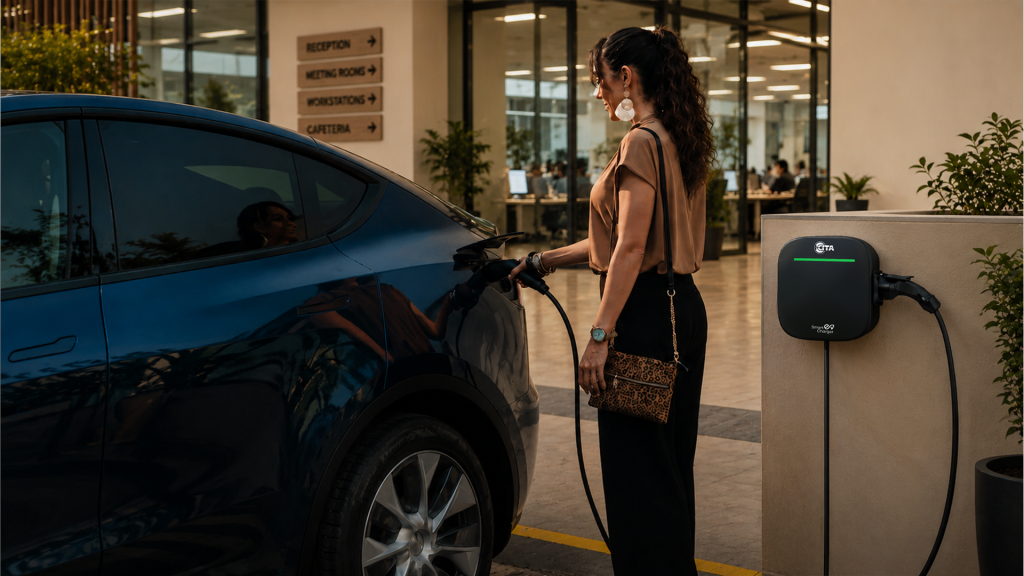
Choosing your first electric car is exciting, but having the right charging equipment makes everyday ownership more convenient.
From charging speed and vehicle compatibility to smart controls and installation requirements, understanding these essentials can help you make an informed investment.
For drivers exploring the Best EV Charger Brand in Dubai, CITA EV Charger offers a range of smart residential charging solutions, including 7 kW, 11 kW and 22 kW AC chargers. Selected models provide app connectivity, scheduled charging, energy monitoring and load management capabilities.
Whether you own a villa or are exploring charging options for an apartment, choosing equipment suited to your vehicle and electrical infrastructure is essential.
Ready to install your first home EV charger in Dubai?
Visit CITA EV Charger to explore available charging solutions and contact the team for a personalised consultation.
A 7 kW or 11 kW smart AC charger is suitable for many households, depending on the vehicle’s onboard charger and available electrical supply. Look for recognised safety standards, smart connectivity and appropriate warranty coverage.
Yes. Villa owners can generally install suitable home charging equipment, subject to applicable DEWA requirements and electrical installation procedures. A DEWA-approved electrical contractor should assess the property before installation.
Not necessarily. A 22 kW charger offers higher potential charging power, but the vehicle must support it and the property must have sufficient electrical capacity. For many drivers, a 7 kW charger provides adequate overnight charging.
Electricity consumption depends on the energy delivered to the vehicle, not simply the charger’s maximum power rating. For example, adding approximately 30 kWh to an EV battery requires at least 30 kWh of electricity, plus charging losses.
A smart charger is not essential for every EV owner, but features such as charging schedules, energy monitoring, remote controls and load management can improve convenience and help manage household electricity demand.